
Top 10 Facts about the Horses of The Household Cavalry

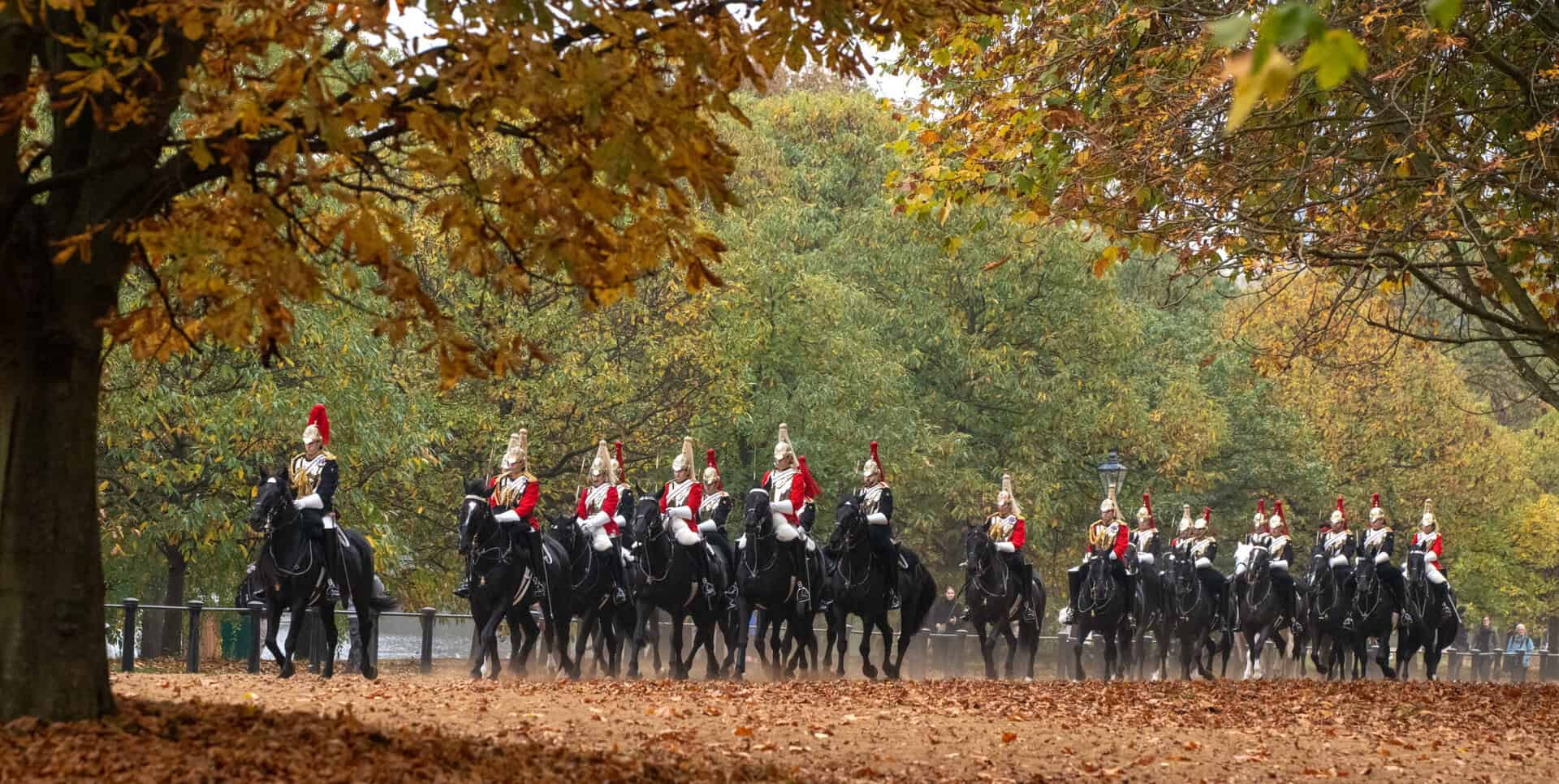
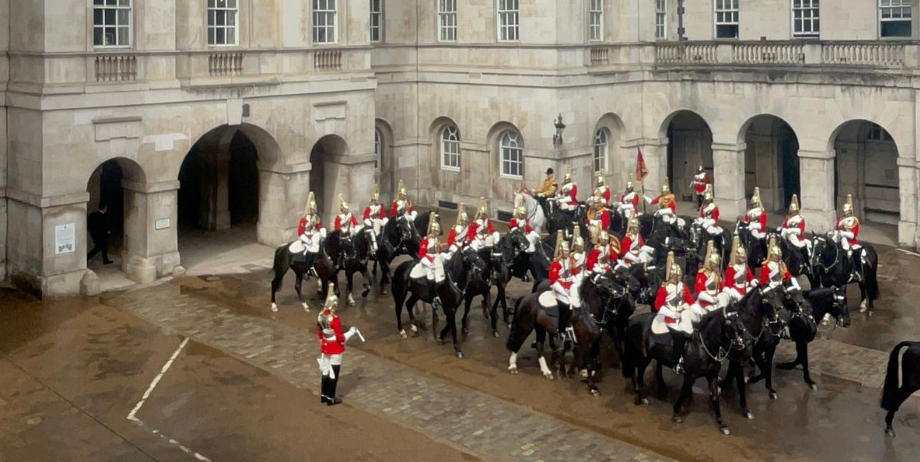
Towering, disciplined and steeped in centuries of tradition, the Horses of the Household Cavalry Mounted Regiment (HCMR) are as much a part of Britain’s ceremonial heritage as the soldiers who ride them. At full strength, the Regiment cares for more than 280 horses, including those fully trained and in training. To help visitors better understand these remarkable animals and the roles they fulfil, we thought we would share our top ten facts you should know about our military working horses.
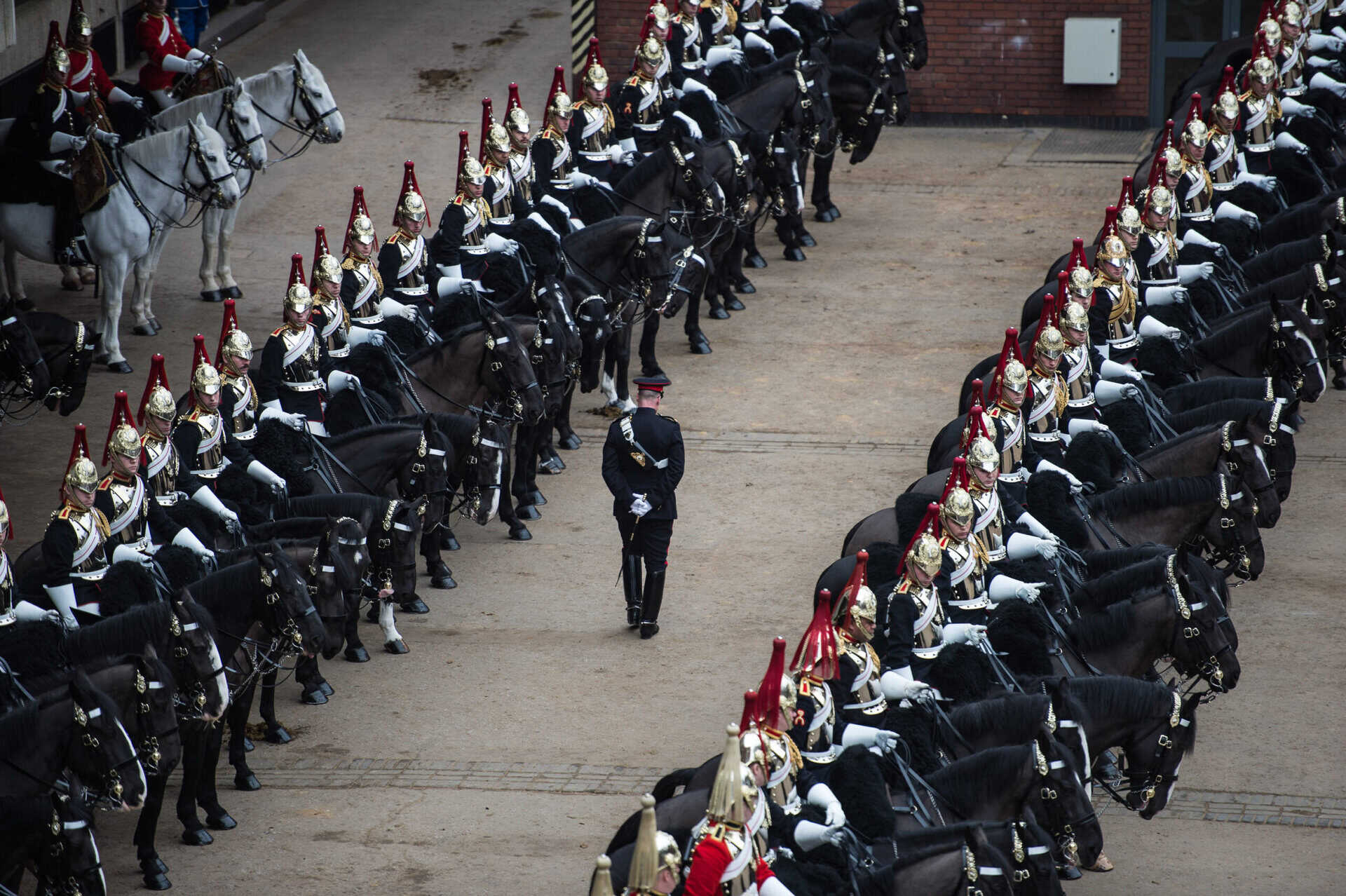
1. They must be a minimum of 16.2 hands high:
This is because they are still bred to the same specifications from when the Household Cavalry were a heavy cavalry regiment; these animals were carrying fairly heavy men, clad in uniform and armour weighing from 25-30kg, along with all their weapons and equipment, and still needed to be able to gallop at speed, so they had to be built to carry a lot of weight!
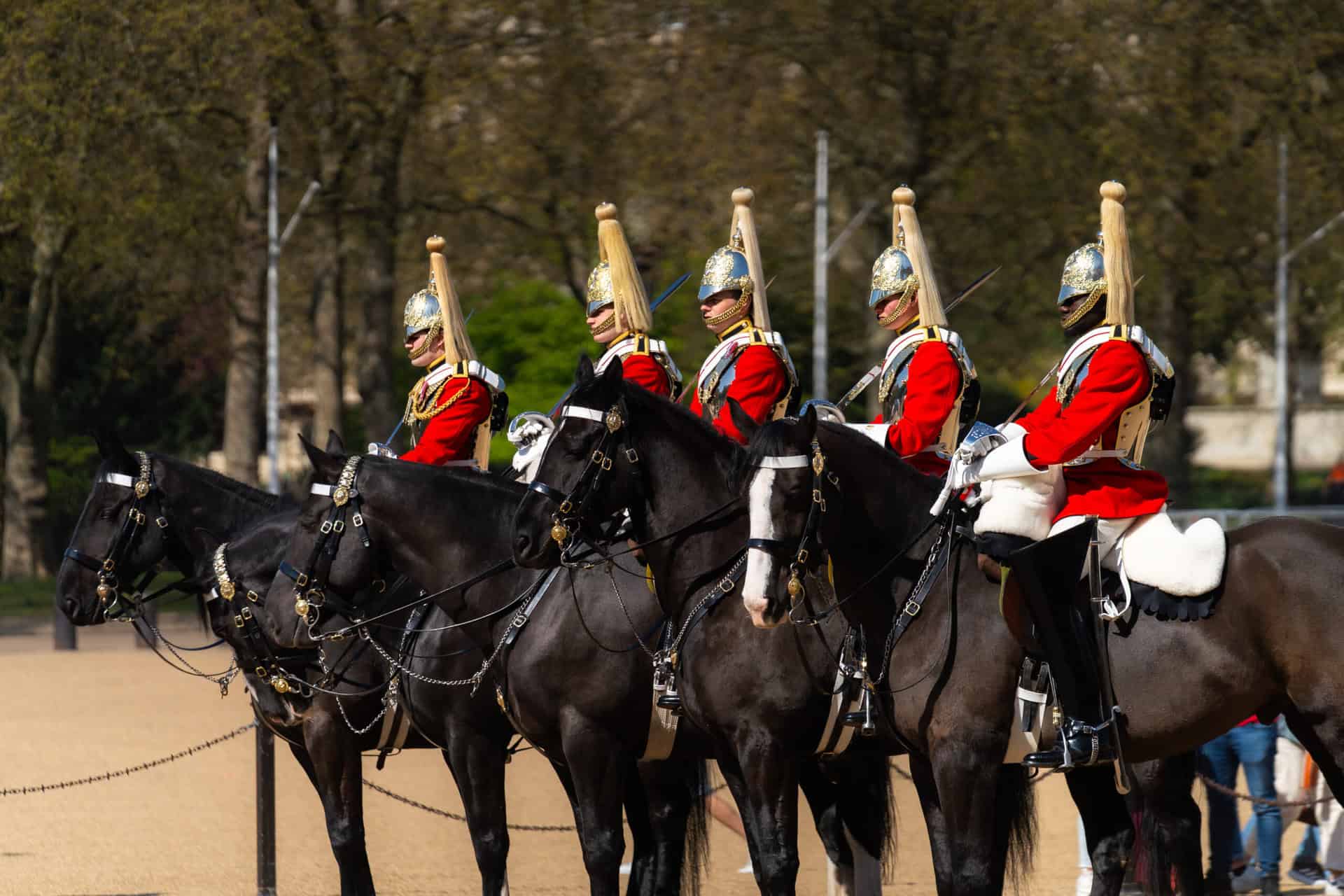
2. They are required to be predominantly black:
King Charles II originally insisted the Household Cavalry’s horses be pure black, believing that black horses of such size and power charging across the battlefield would terrify the enemy. This has been relaxed due to modern day difficulties in sourcing large numbers of pure black horses.
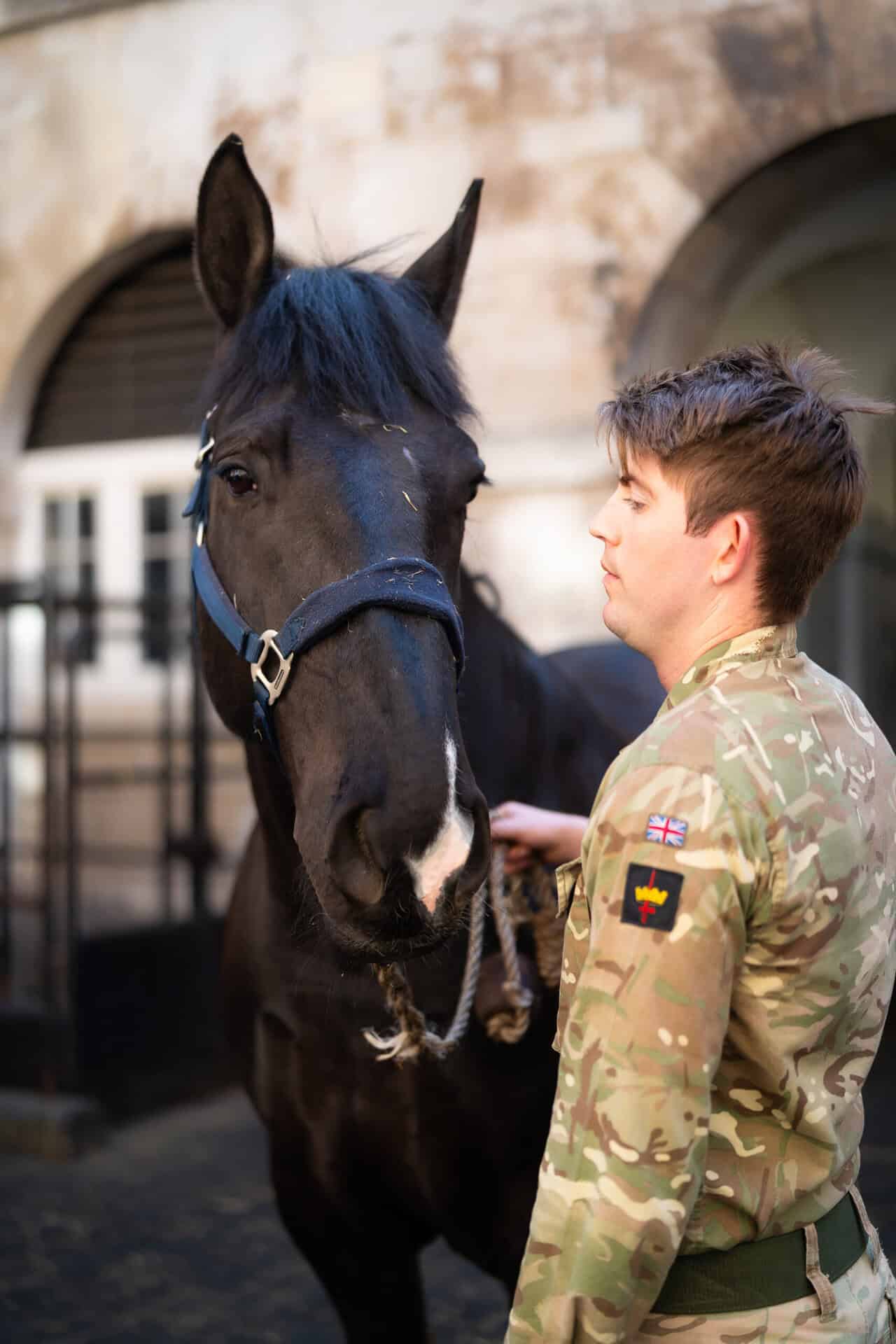
3. There is one exception to this:
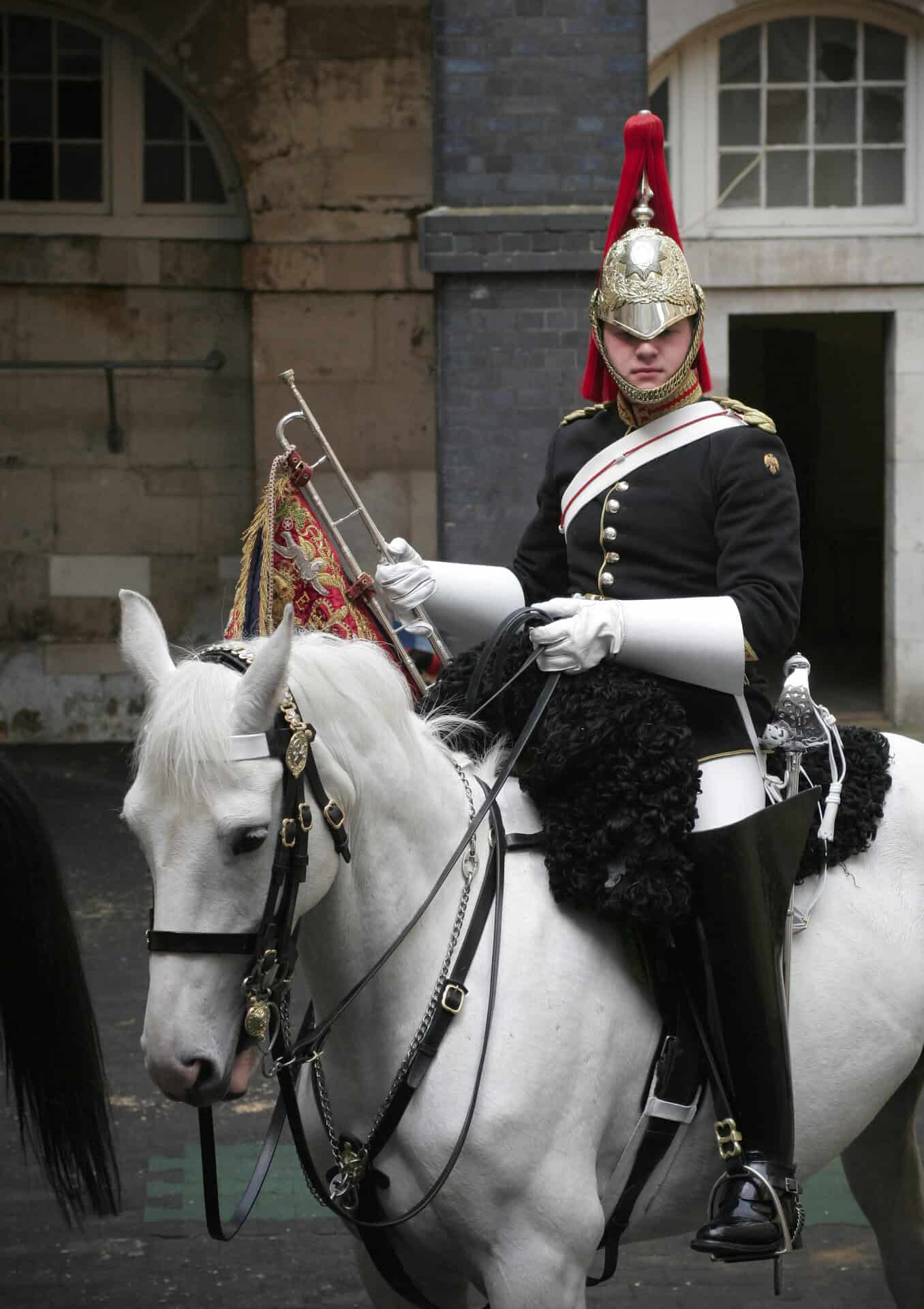
The only horses that vary from this are the horses ridden by regimental trumpeters, which are white (known as grey due to their dark skin colour), which can be seen at ‘Long Guards’ (the Changing of the Guard when the monarch is in residence in London) and at other ceremonial parades like Trooping the Colour (the King's Official Birthday Parade).
This was to make them more visible on the battlefield: it was seen as impolite to target a General’s means of communication, so trumpeters and drummers had obvious identifiers so they would be easily recognised in battle.
4. Household Cavalry horses start their careers untrained:
Traditionally, the Household Cavalry purchases the horses when they are between 4-5 years old and they should be large mares or Stallions that have been gelded (‘Geldings’).
Most of the horses have never been ridden and are treated as if it’s the first time so the soldiers can create a good/trusting mentality and help calm any bad habits or experiences. Horses are like people - some learn more quickly than others. Ideally, the training of one of our horses takes 6 months from start to finish, but it can take as long as 18 months. They are all treated as individuals with individual needs so putting a pressured timescale on them is not encouraged.
5. Their service usually concludes when they’re 18 years old but some have served into their 20’s:
While some do serve longer, on average Cavalry Blacks serve until they’re about 18 years old.
As they get older, some of them are less able to cope with constant trotting on the roads and long escort duties. Many of them become Band horses where they will only be walking on parade. If they are healthy, which most of them are when they retire, the regiment will send them either to an established retirement stables or to members of the public who have suitable stabling and facilities. Some of the horses go to retire with the Horses Trust. Some soldiers are known to purchase horses they’ve grown particularly fond of.
6. The Horses are named alphabetically like car registrations:
Once horses are chosen, a list of potential horses’ names are submitted to the Commanding Officer for approval. Names are often regimentally connected - such as battle honours, historic persons of note, places etc but each new Squadron Leader tends to add a personal flavour to their own selection.
The horses are named alphabetically; like car registrations, each year all new horses’ names begin with the same letter. The letter for 2025 was ‘A’, so 2024 was ‘Z’. It is good to note that HCMR does not use ‘X’, as there aren't many names to choose from and fewer Battle honours.
7. The Drum Horses of the Household Cavalry Band are the most senior animals in the British Army:
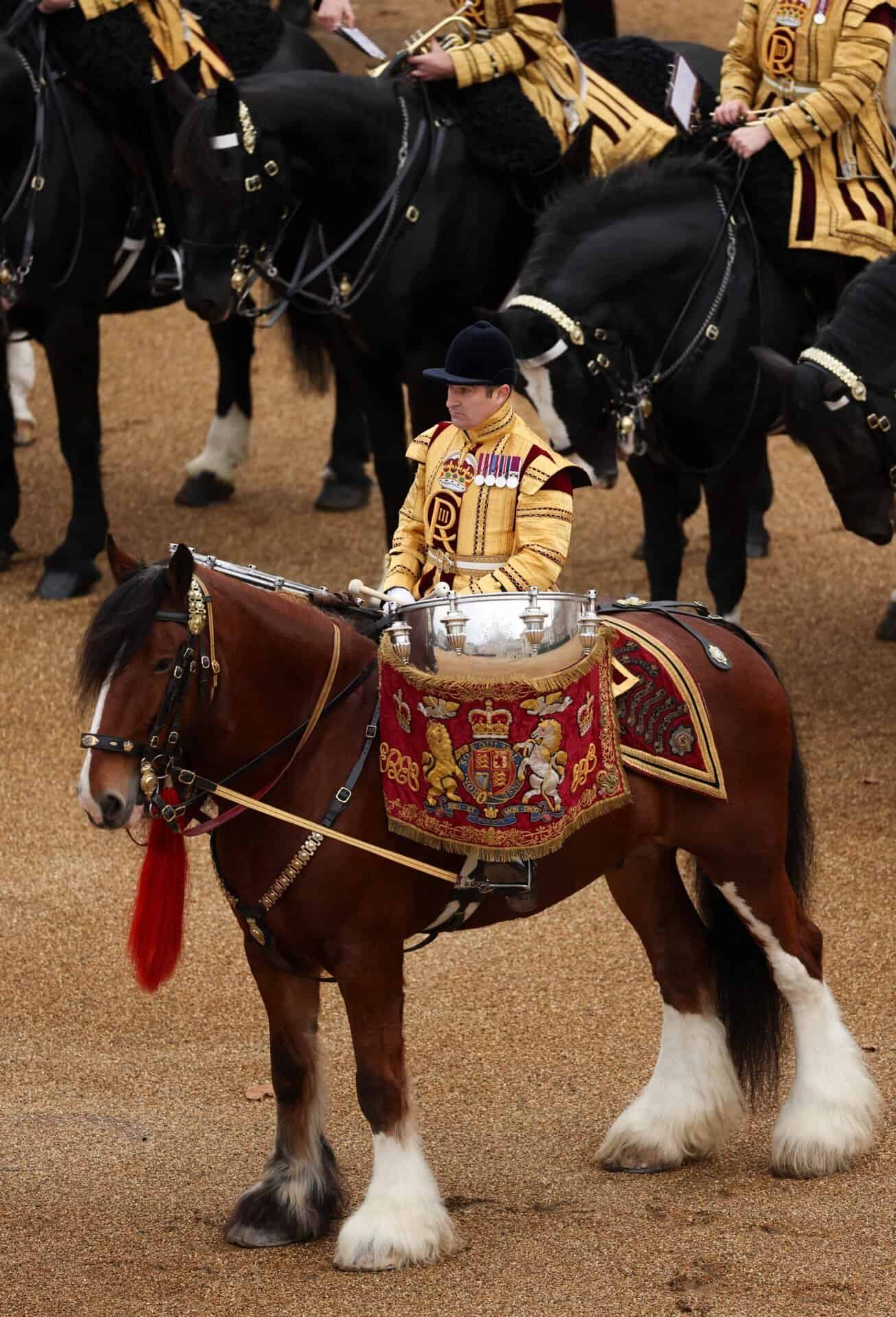
There are currently four drum horses attached to the Household Cavalry Band: Juno, Perseus, Atlas and Apollo. Traditionally they’re given names from Greek or Roman mythology and are either a Clydesdale or Shire horse. They stand between 16.3-18 hands high from hoof to withers and their size is a necessity to compensate for the weight they have to carry, which would be the rider and two drums each weighing 60lbs (25kgs). These four horses all hold the rank of Major, making them the most senior animals in the British Army.
8. There’s no set horse to a particular trooper:
Soldiers are not assigned a particular horse for the duration of their service with the Household Cavalry: they will be assigned a specific horse while on guard duty at Horse Guards, but they may be assigned to a completely different horse the next time. This is so they ‘learn to ride any horse in any circumstances. Although, of course some soldiers have their favorites to ride!
9. The Horses have a summer holiday:
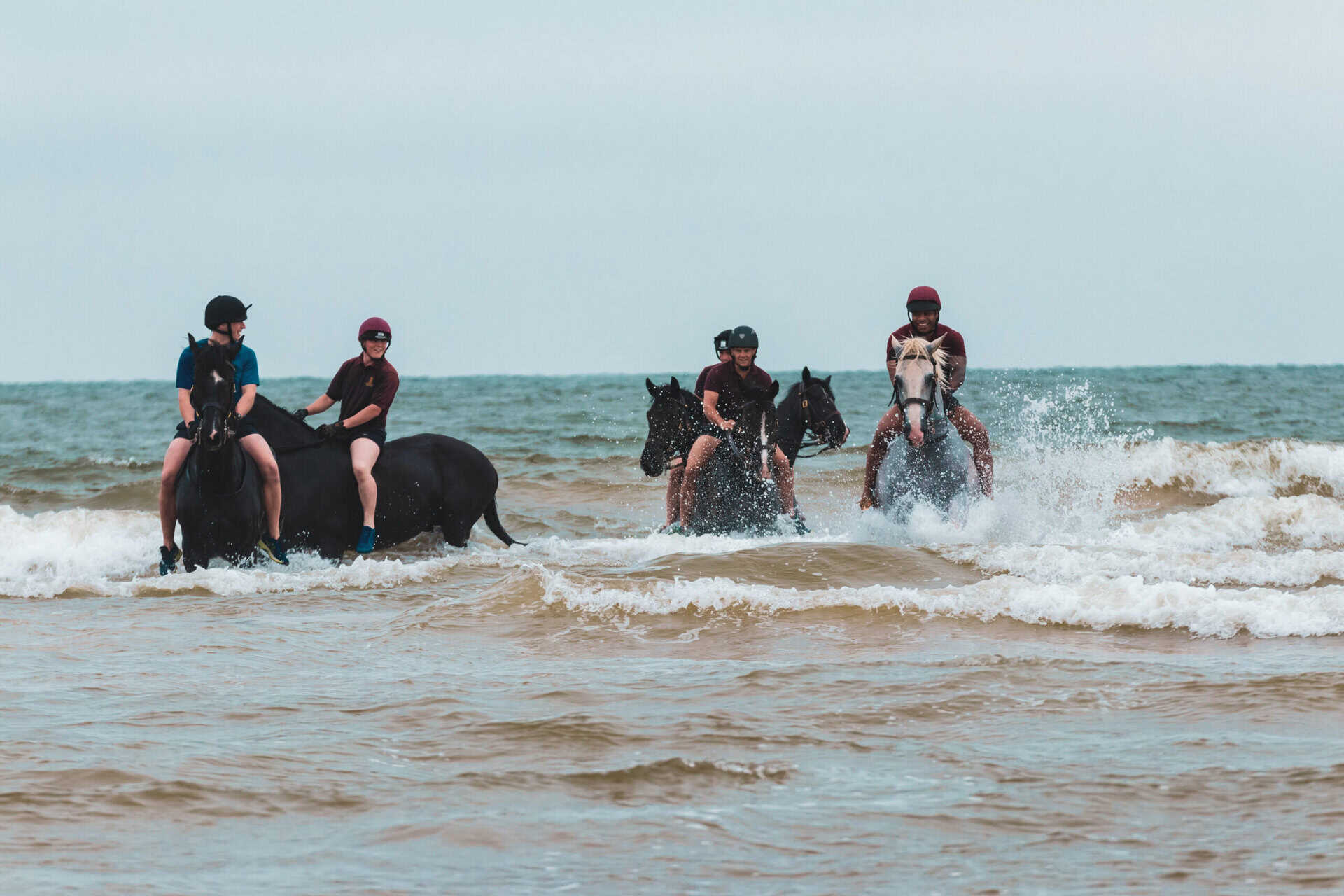
The Household Cavalry Mounted Regiment has an annual ‘Summer Camp’ where for 3 weeks a year they swap the ceremonial duties in London for time in a rural location, like Norfolk.
More than 100 horses and soldiers undergo a series of equestrian training exercises including a ride out on Holkham beach. Using the wide-open spaces of a coastal environment to practise equestrian and military skills, helps build trust between horse and rider, and improving their prowess as professional soldiers.
Major Tom Mountain added: "Bringing them to the beach exposes the horses and riders to new things, helps with their confidence, and makes them and us more able to cope when we get back to London."
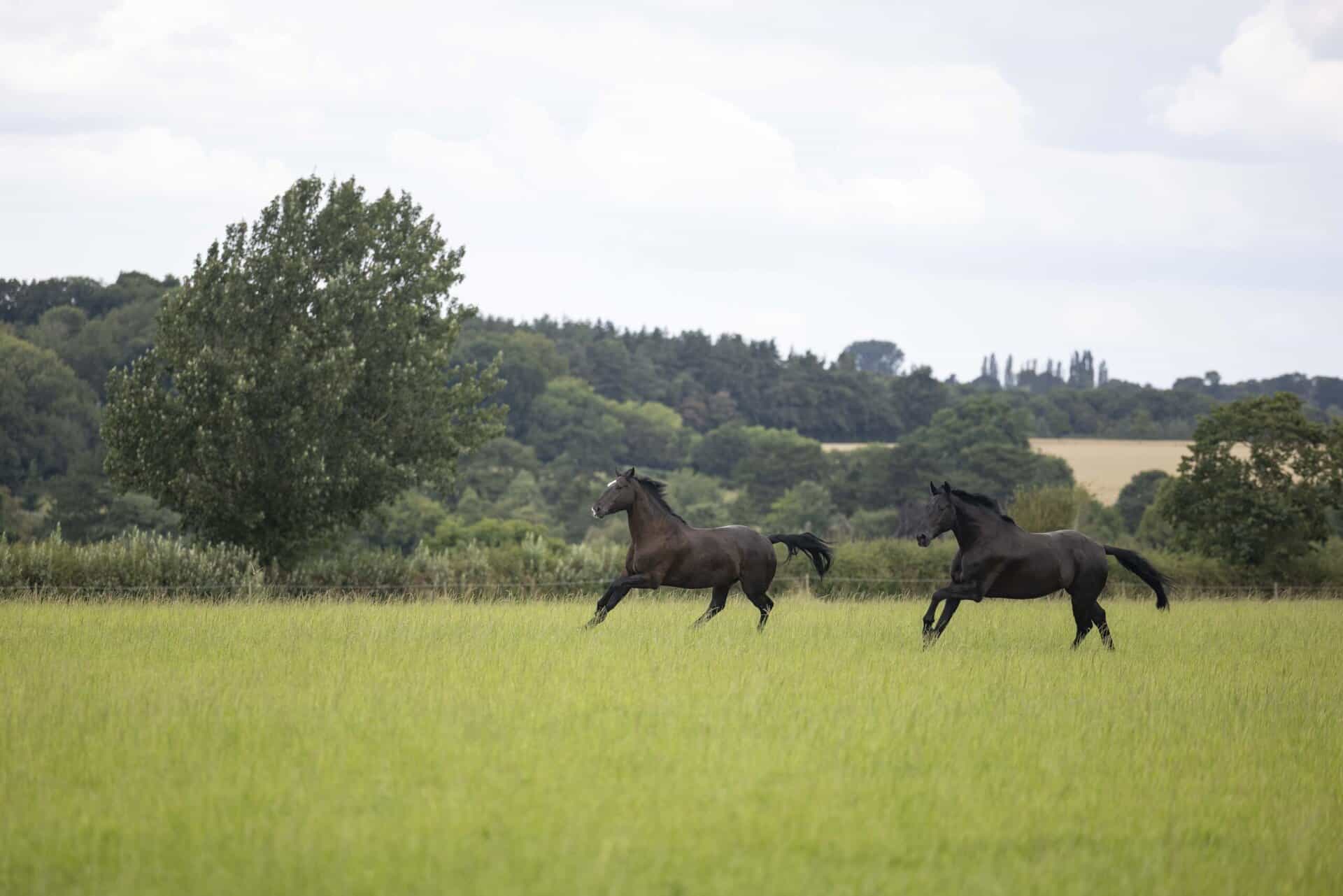
They are also ‘sent out to grass’ twice a year for a well-deserved break, as well as numerous ‘long weekends off’ throughout the year.
10. Mounted Guard Duty starts at 10am at Horse Guards, but the horses’ day starts earlier:
The horses are exercised 6 days a week in Hyde Park and on the roads around Knightsbridge. Horses used to train new recruits are normally based in Windsor and exercised in Windsor Great Park. Before ceremonial parades, exercise times are increased and a hard training programme is implemented. Most rehearsals take place before 6am to avoid the traffic. Their guard duties commence at 10am at Horse Guards (typically, the horses and their riders will do an hour of guard duty on Whitehall, then two hours off) with the guards changing every hour until 4pm when their duties finish with the “Punishment Parade”.
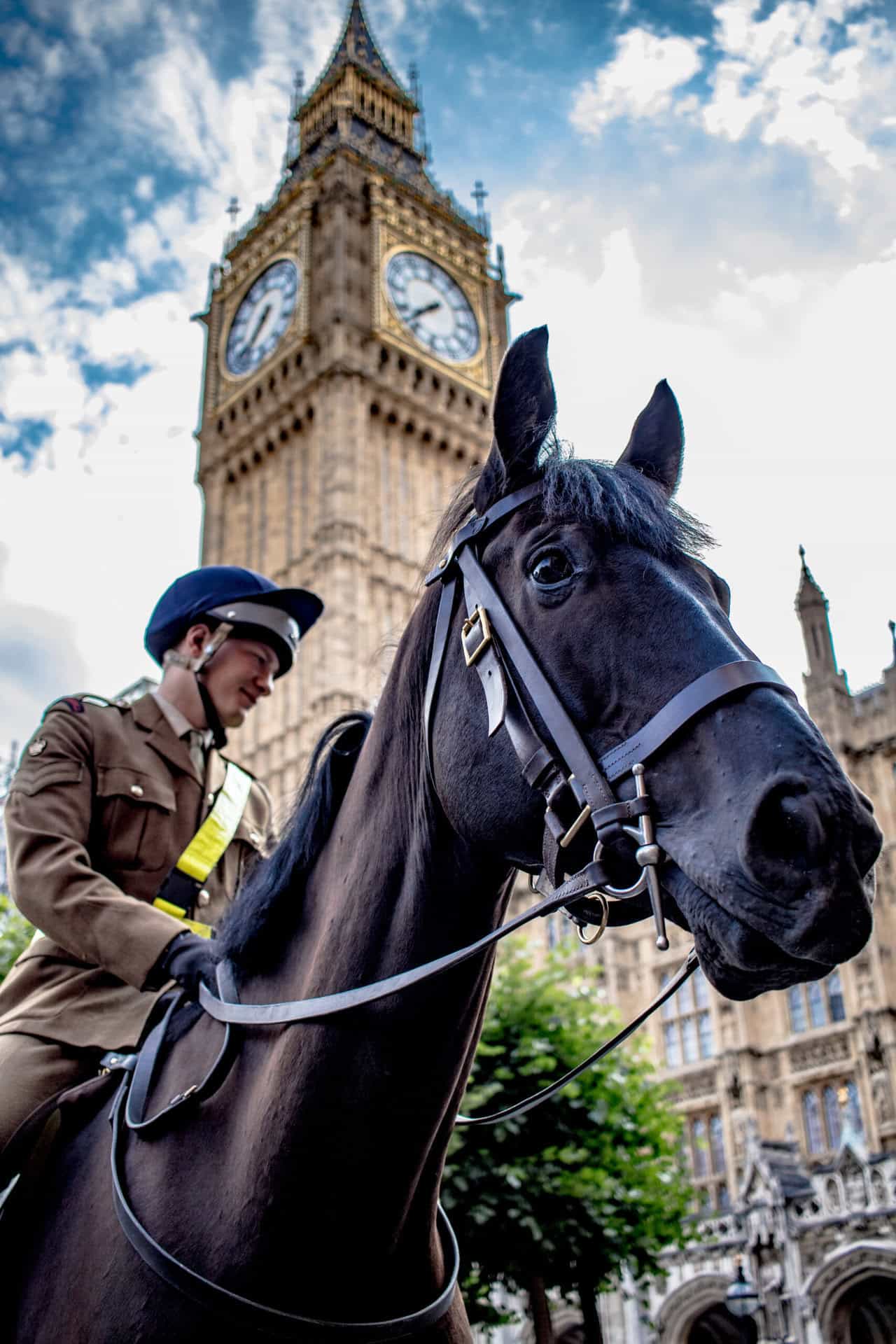
Find out more about when you can see the Military Working Horses at Horse Guards
Visit our pop up exhibition all about the Horses of the Household Cavalry
Latest stories
Blog stories
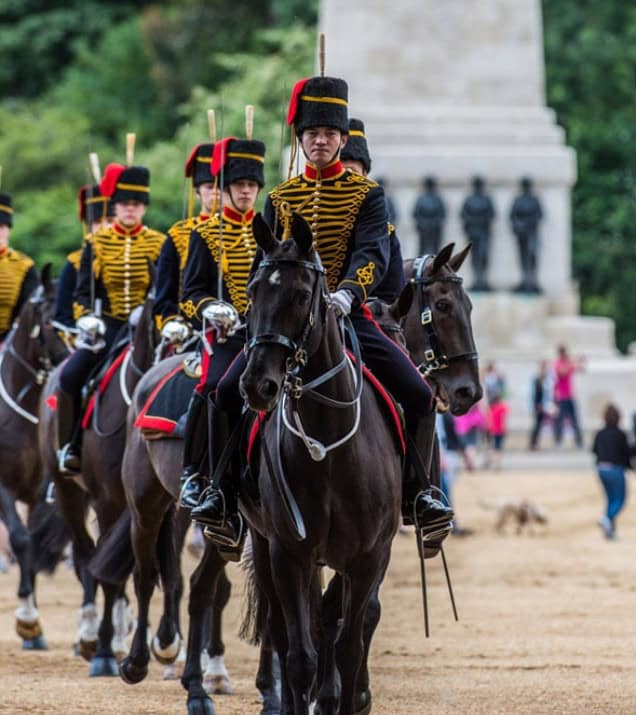
King's Troop Royal Horse Artillery
11th September 2026
For the next few weeks, the Mounted Guard duty here at Horse Guards will be passed to the King’s Troop Royal Horse Artillery. The soldiers are extremely visually distinctive from the Household Cavalry due to their black and gold uniforms and the black fur busbies they wear in place of helmets. You will usually find the King’s Troop firing the...
HCM News
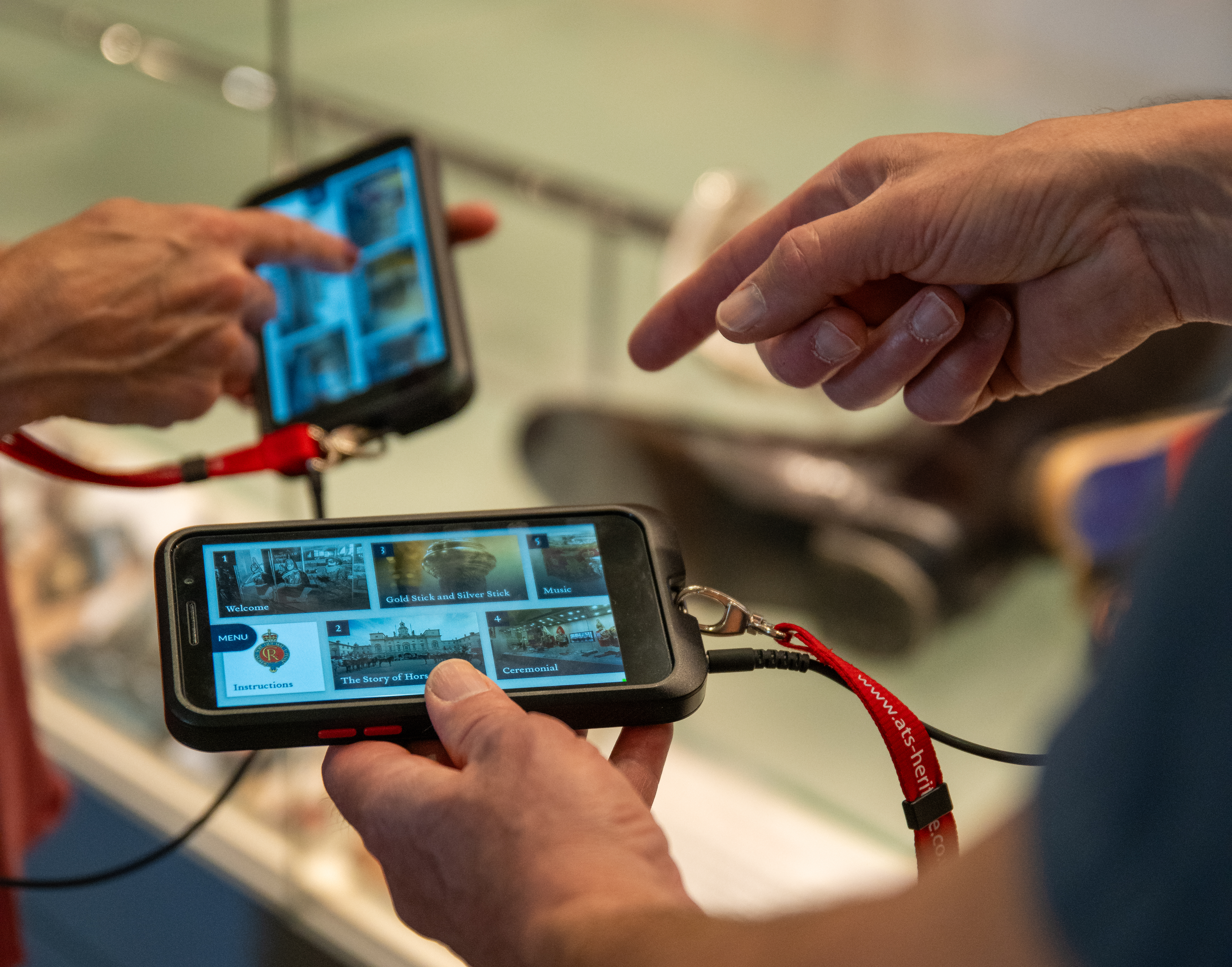
Household Cavalry Museum unveils multilingual multimedia audio tours
27th August 2026
The Household Cavalry Museum has launched its new multimedia audio tours, now available in six languages: English, German, French, Italian, Spanish and Chinese. The new tours represent an investment in enhancing the visitor experience and reflect the museum’s ongoing commitment to making its collections and stories more accessible to audiences from around the world. Located in the heart of London’s historic...
Soldiers' stories
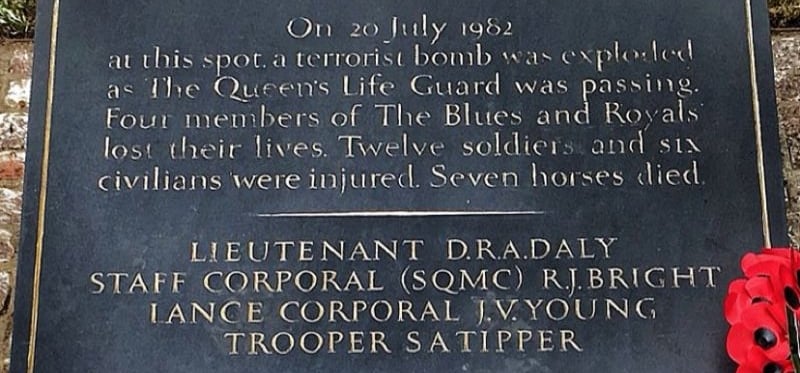
Remembering the Hyde Park Bombing, 20 July 1982
20th July 2026
It is sometimes easy to forget, when seeing the Household Cavalry processing through London in all their pageantry, or standing motionless on their ceremonial guard duty along Whitehall, that they not simply symbols of tradition but serving soldiers of the British Army. . Behind the polished cuirasses and gleaming helmets are men and women who accept the same risks and...
Regimental Histories
The Extraordinary Objects of Waterloo
17th June 2026
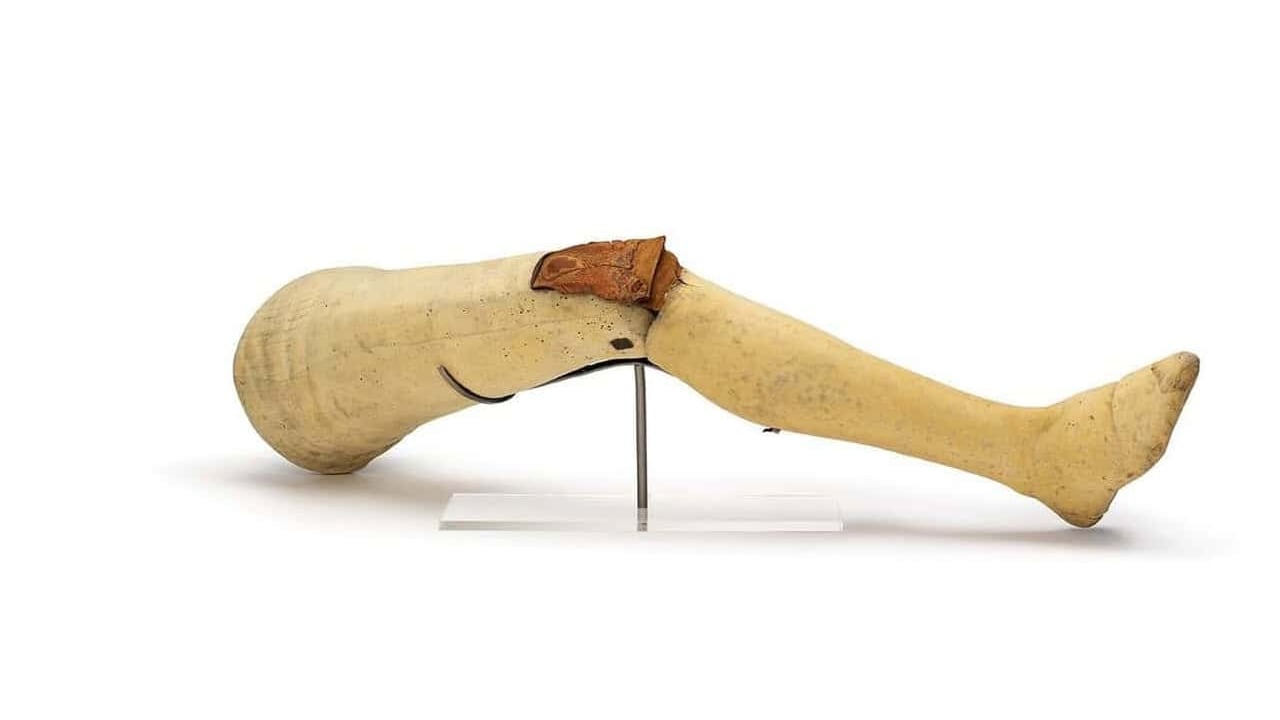
More than 200 years after the Battle of Waterloo ended Napoleon Bonaparte's ambitions and brought the Napoleonic Wars to a close, a handful of remarkable artefacts continue to tell the human stories behind the famous victory. Among the most fascinating items in the Household Cavalry Museum are the skull cast of Corporal of Horse John Shaw, the prosthetic leg of...
Cavalry Horses
Sefton's Story: Courage in the Face of Tragedy
14th July 2026
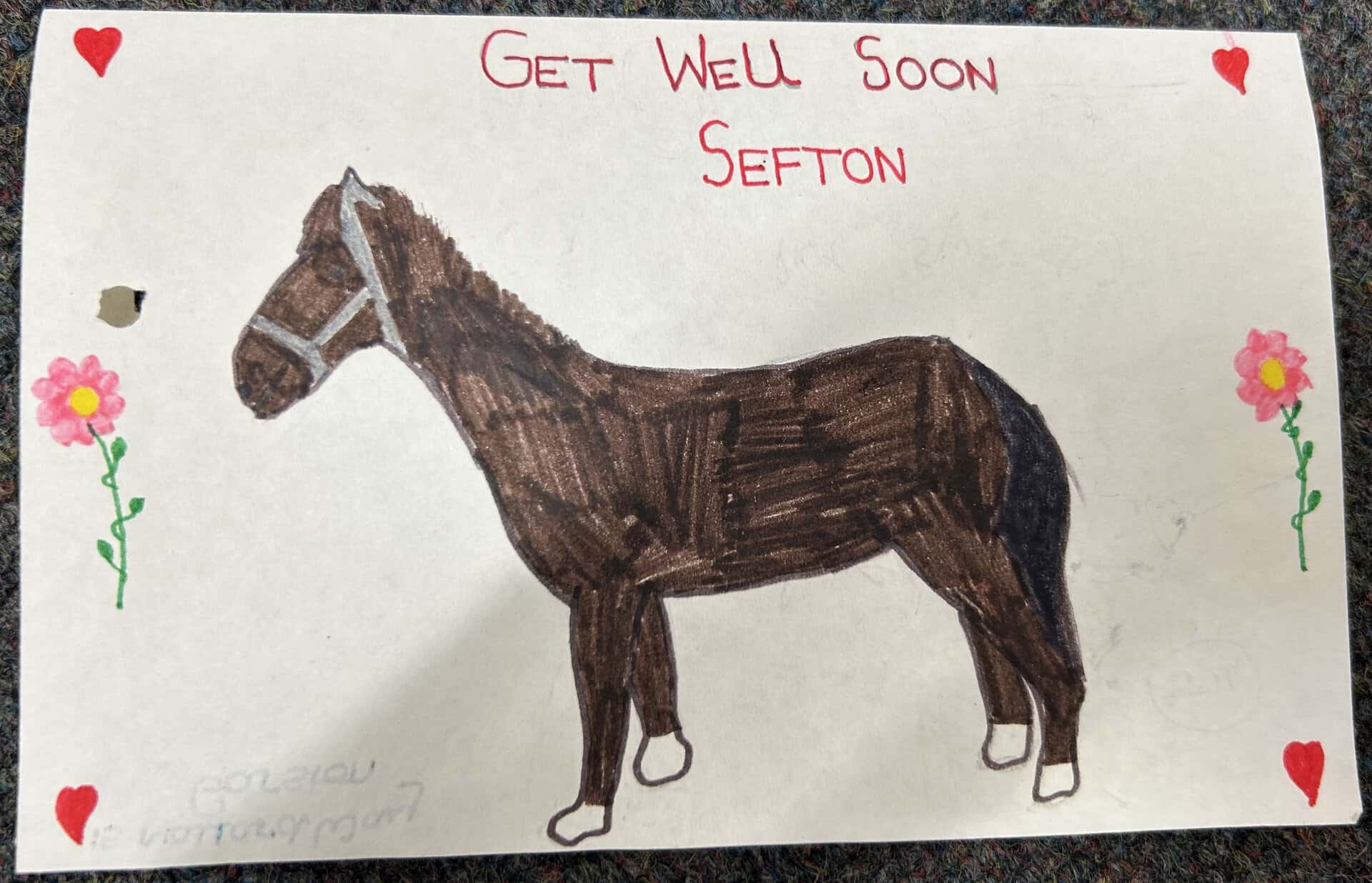
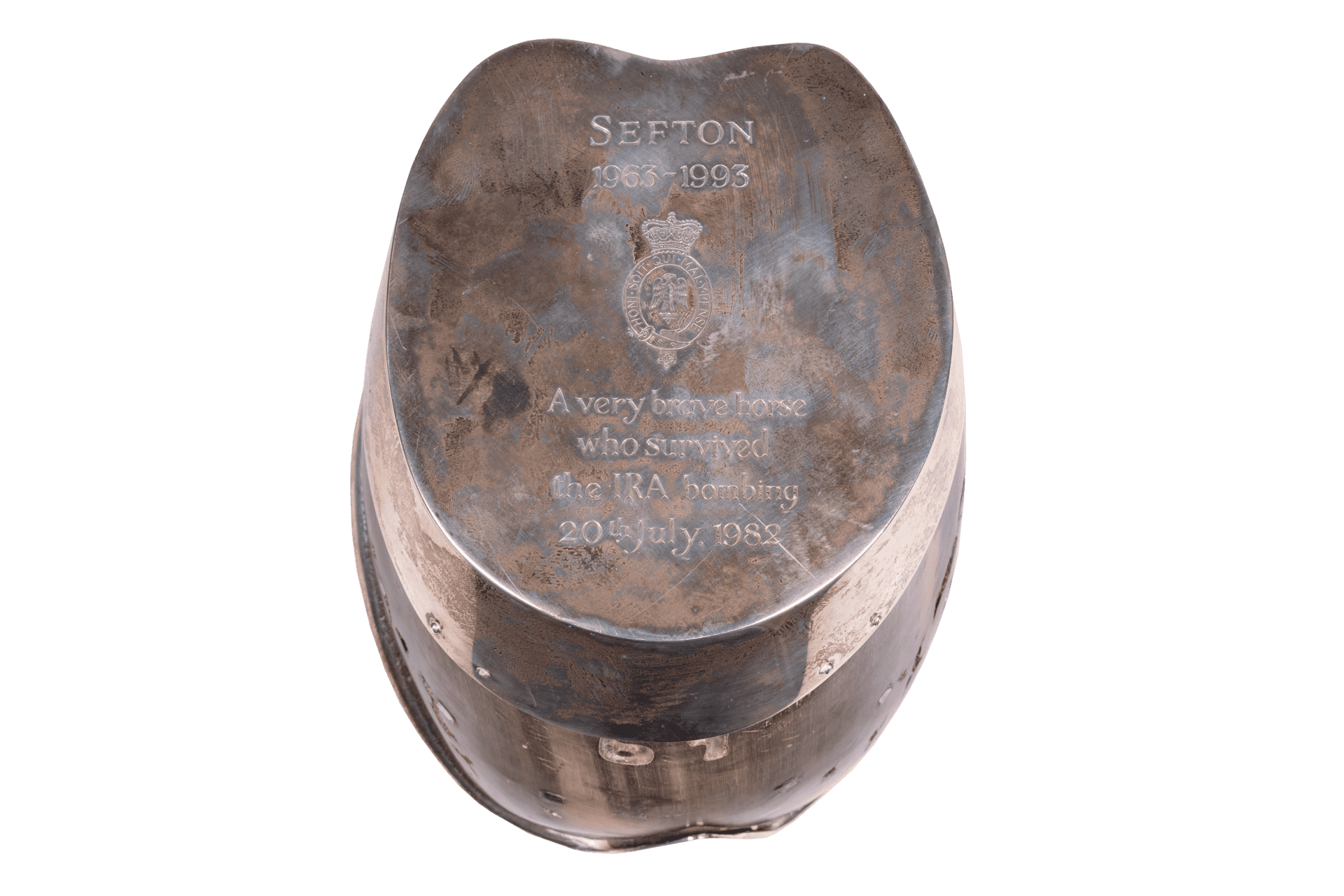
On the 9th of July, we remember Sefton, one of the Household Cavalry’s most famed horses of recent history, who embodied the regiment’s attentiveness to the well-being and care of its horses. Initially notorious amongst the regiment for stubbornness and bad behaviour, Sefton entered British history through horrific circumstances to become a symbol of fortitude, resilience and defiance. He became...
Regimental Histories
Soldiers' stories
Blog stories
The Charge of the 1st Life Guards at Genappe
17th June 2026
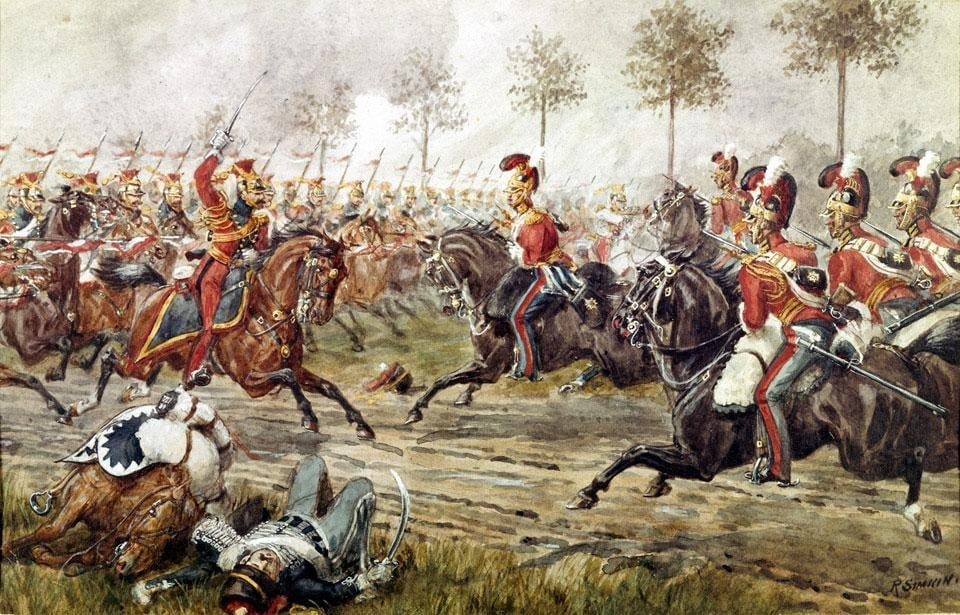
On 17 June 1815, just one day before the Battle of Waterloo, the 1st Life Guards hurled themselves into battle at the Belgian village of Genappe, fighting a savage rearguard action that rescued their comrades of the 7th Hussars and 23rd Light Dragoons from French lancers. Their timely intervention successfully threw back the French cavalry pursuing the Anglo-Allied army as...
Regimental Histories
Arms, Armour & Uniform
Dressed for Duty: The History of the Household Cavalry Uniforms
27th May 2026
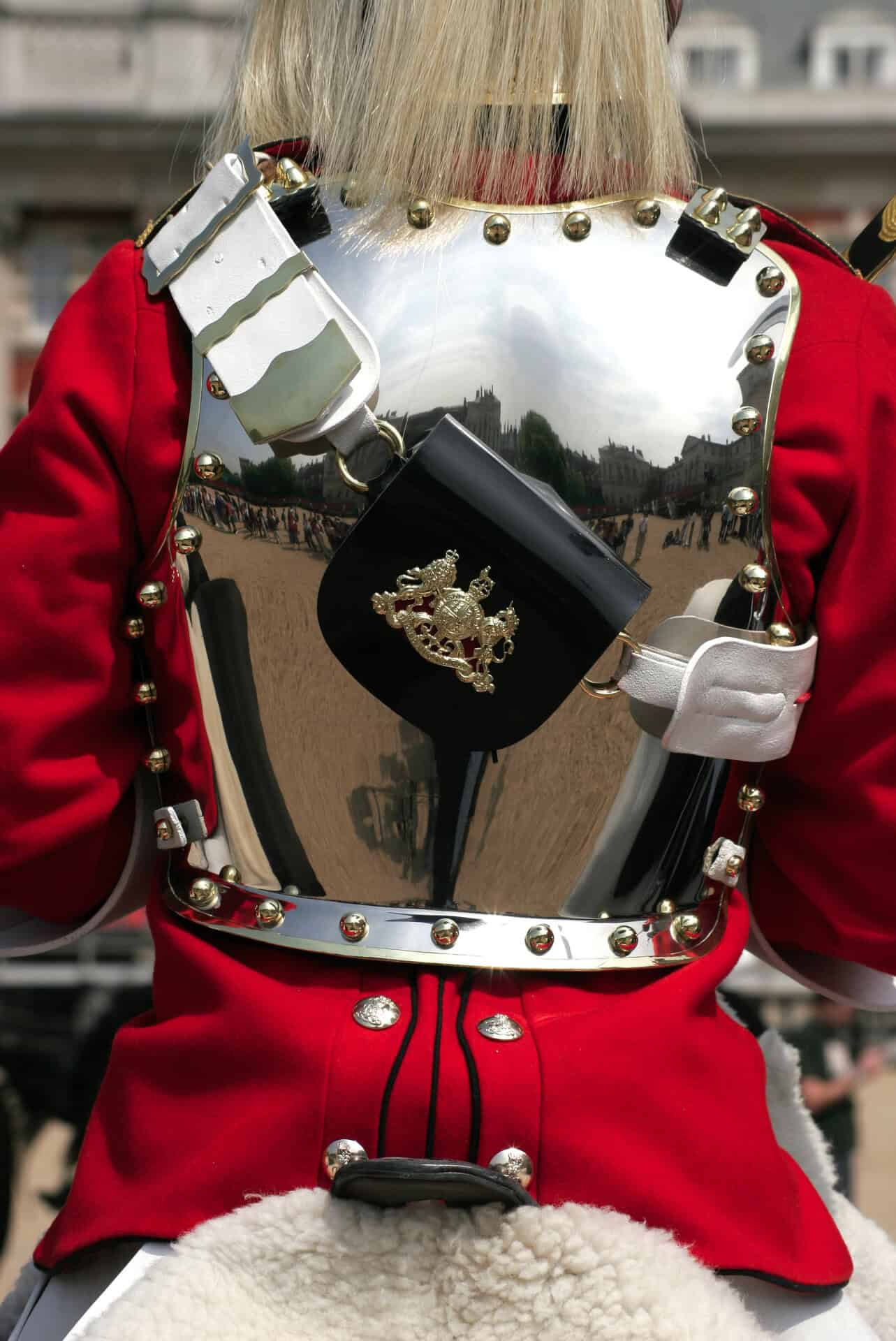
The two regiments of the Household Cavalry, the Life Guards and the Blues and Royals, are visually distinctive on parade, particularly in the coming months when they are a focal point of the summer pageantry on Horse Guards Parade. But what is the significance of their vibrant and ornate uniforms? Why do some members of the Household Cavalry differ from...
Blog stories
The Household Cavalry at the State Opening of Parliament
13th May 2026
The State Opening of Parliament is one of the most magnificent ceremonial occasions in the British calendar - and at its heart, the Household Cavalry play a central and historic role. Each year, as Parliament begins its new session, the Monarch travels in procession from Buckingham Palace to Westminster. It is the Household Cavalry who lead the way: over one...
Regimental Histories
What the Objects Don’t Say: Inside the Household Cavalry Museum Collection
13th April 2026
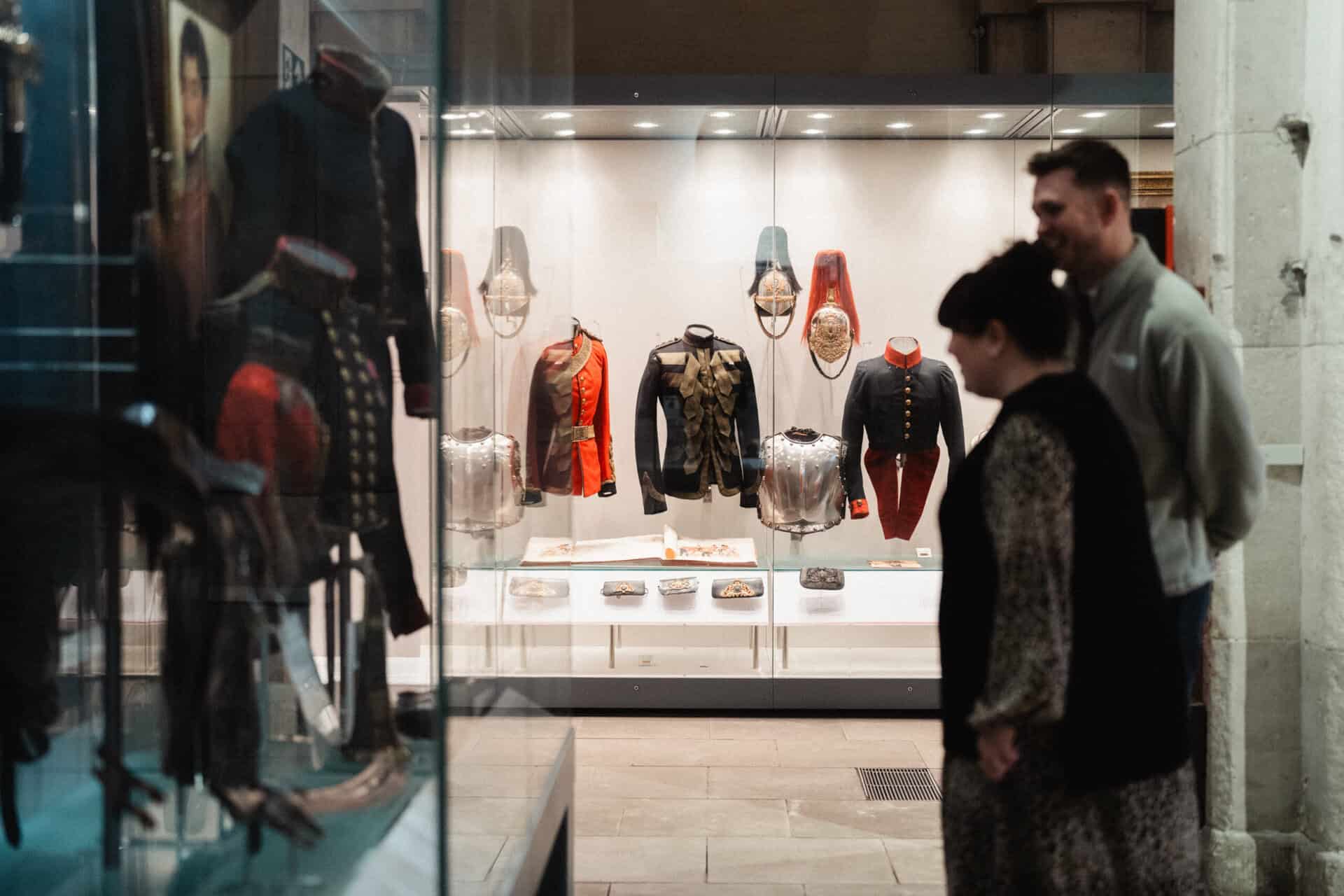
Every artefact displayed in the Household Cavalry Museum comes with a unique story attached, some far stranger than others - from a phenomenally expensive officer’s breastplate worn only once, to a sword wielded in combat at the Battle of Waterloo, to a campaign medal awarded to a cavalry horse for bravery. It is the Museum’s responsibility to preserve this historical...
Regimental Histories
Philip the Bear: The Household Cavalry's Most Unlikely Companion
23rd March 2026
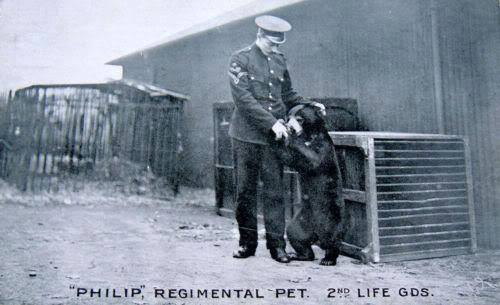
Horses more likely come to mind than bears when one mentions the Household Cavalry, but strange as it sounds, a bear has a unique claim to fame in the Household Cavalry’s regimental history, a fitting story for World Bear Day today… Phillip was a brown bear, possibly imported from Canada where they are a native species, owned as a pet...
Cavalry Horses
From Waterloo to Hyde Park: The Horses of the Household Cavalry
25th February 2026
International War Animal Day commemorates the animals of all shapes and sizes that have served, suffered and died in human conflicts throughout history: from cavalry horses and military service dogs to carrier pigeons and camels. The occasion holds particular significance for the Household Cavalry. Across centuries of military service, the Cavalry Blacks have taken part in some of the bloodiest...
Soldiers' stories
The Day Burnaby Died: Legend and Loss at Abu Klea
16th January 2026
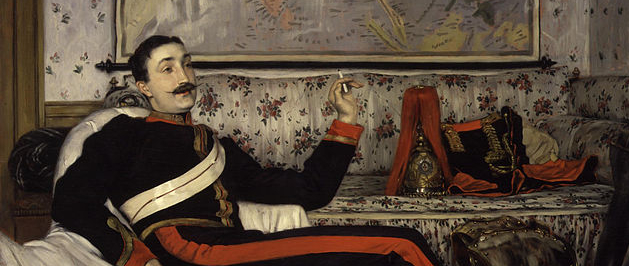
On 17 January 1885, the Household Cavalry lost one of its most legendary figures when Colonel Frederick Gustavus Burnaby was killed in action at the Battle of Abu Klea in present-day Sudan, fighting beside old comrades and dying as he had lived - with daring and courage. When General the Lord Wolseley was ordered to lead the Nile Expedition to...

HCM News
A very special visit
24th April 2025
It was a pleasure to welcome Amin and his father Esmail to the museum yesterday (10/04/2024) for a very special visit. Amin, a keen fan of the Household Cavalry, had the chance to get up close with the uniforms, history, and traditions he admires so much at our museum. It was a joy to see his enthusiasm and curiosity come...

Regimental Histories
The Household Cavalry’s Royal Connections
17th April 2025
For over 350 years, the Household Cavalry has stood as a living link between the British Monarchy and its armed forces. From its origins under Charles II to its modern ceremonial duties, the Household Cavalry’s story is woven tightly into the fabric of royal history. Charles II: The Founding Monarch The story begins in the reign of Charles II, who,...

Regimental Histories
The Household Cavalry Timeline: 350 Years of History, Honour and Horses
17th April 2025
The story of the Household Cavalry is not just a tale of ceremonial pomp - it's a living timeline of royal service, military tradition, and national history. From the battlefields of Europe to the heart of London’s ceremonial life, the regiments that make up today’s Household Cavalry have played a continuous and evolving role since the 17th century. 1660 –...

Soldiers' stories
John Edwards (1st Life Guards)
31st December 2024
John Edwards was born on the 4 October 1799 in Westminster, London and joined the 1st Life Guards (1st LG) in 1809 aged just 9 years old and under 4 feet tall....


