
What the Objects Don’t Say: Inside the Household Cavalry Museum Collection
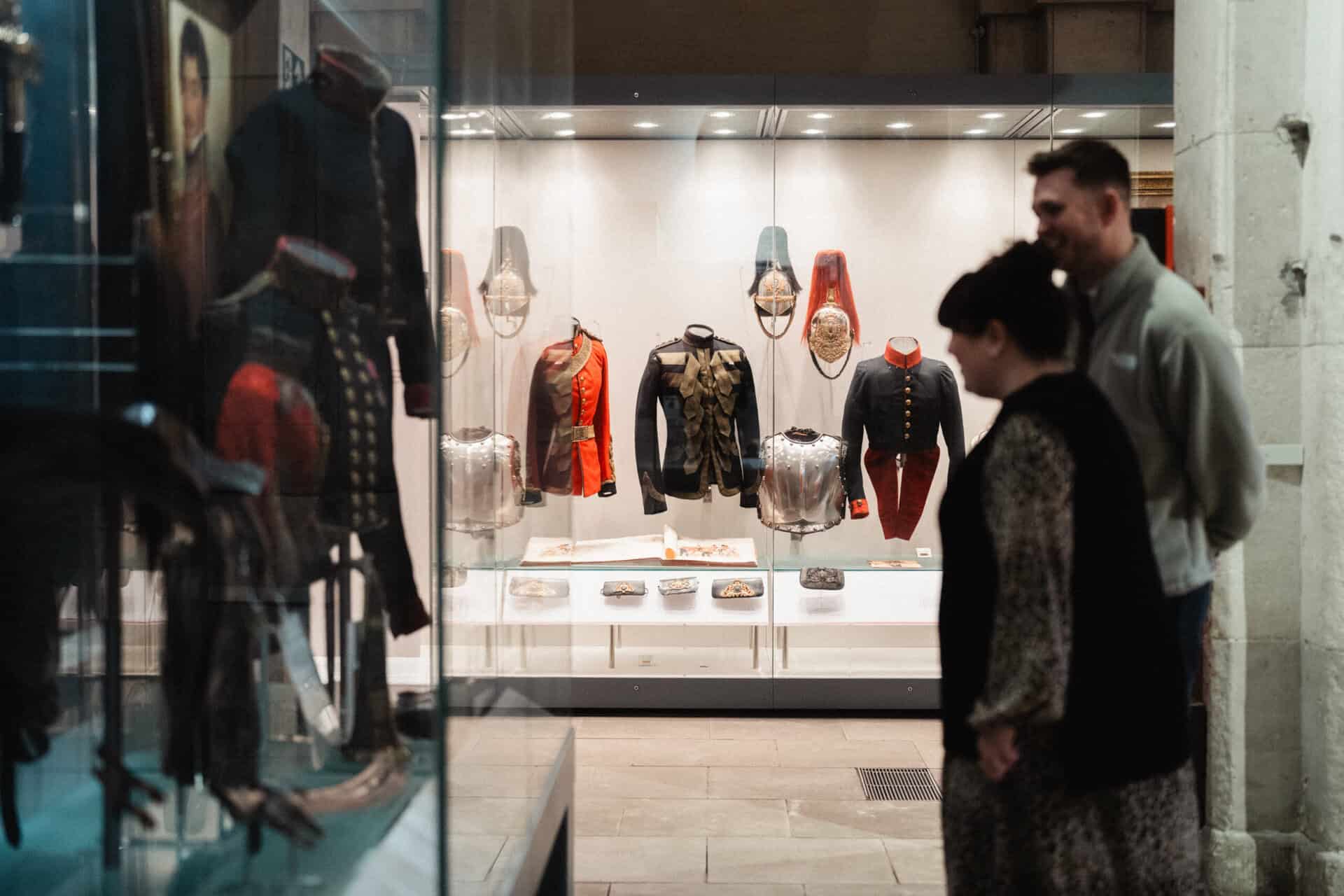
Every artefact displayed in the Household Cavalry Museum comes with a unique story attached, some far stranger than others - from a phenomenally expensive officer’s breastplate worn only once, to a sword wielded in combat at the Battle of Waterloo, to a campaign medal awarded to a cavalry horse for bravery. It is the Museum’s responsibility to preserve this historical legacy of duty, sacrifice, and courage, telling the story of how the Household Cavalry began, the deeds they have done, and how they continue to serve as a regiment of the British Army to this day.
The Household Cavalry Museum differs from many other military museums in the UK, as we sit upon Horse Guards Parade in close proximity to Whitehall, where military ceremonies and traditions dating back centuries continue to be performed daily. This setting helps us to illustrate the Household Cavalry’s enduring role as ceremonial bodyguards to the monarch at the heart of London.
However, it also poses a challenge in displaying the collection. The Museum is a relatively limited space within a Grade I Listed building that also remains a working military site and in close proximity to live animals. As a result, curators must carefully determine which artefacts best showcase the regimental history and legacy of service, capture the public’s interest, and embody the regiment’s combined military and ceremonial roles, while also taking the utmost care to ensure its ongoing preservation for future generations.
Crowd Stoppers
There are some pieces displayed here in the Museum that are guaranteed to bring visitors to a halt, either because of their scale, sheer opulence, or the nature of the stories attached to them. Below are three such objects:
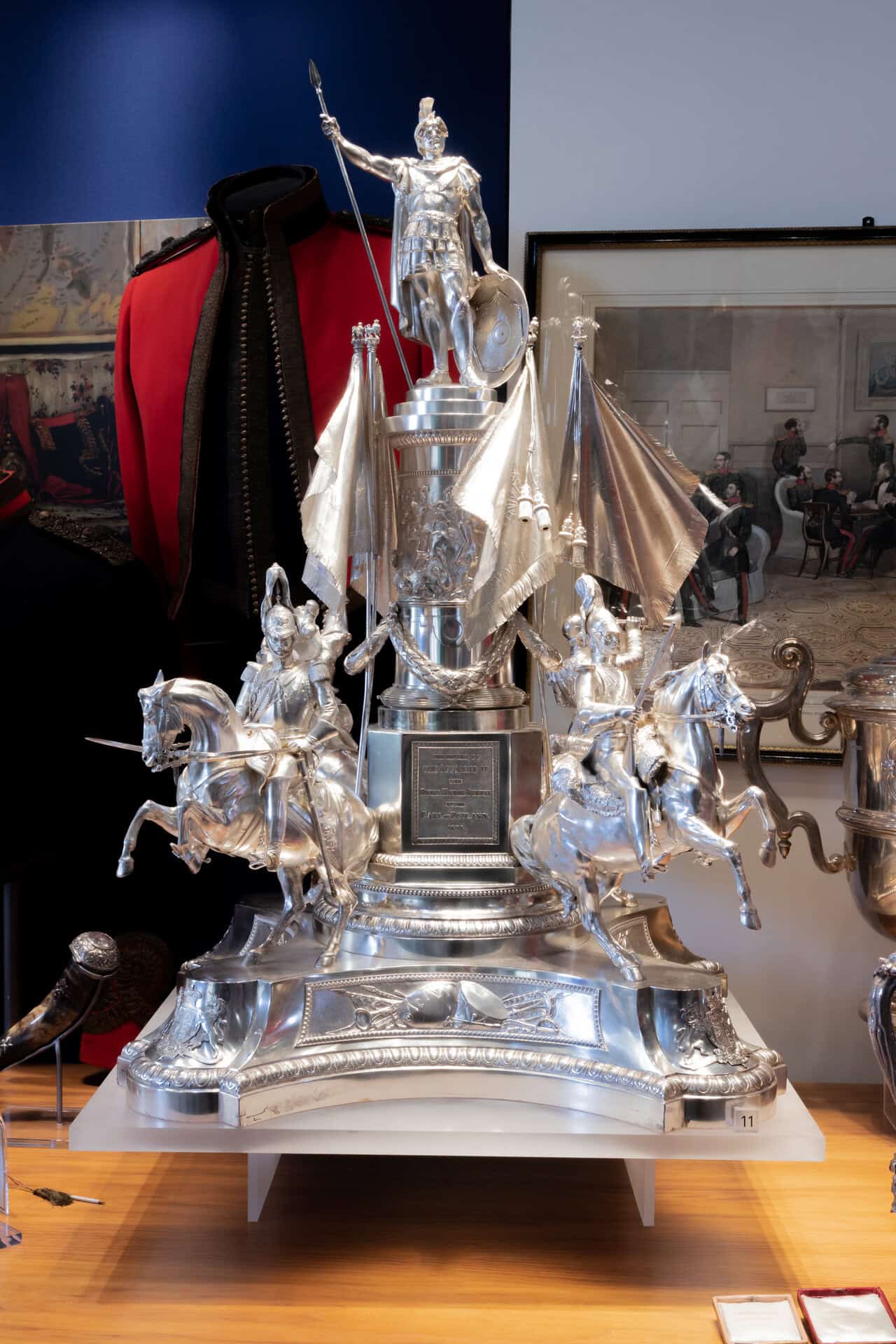
The Zetland Trophy always draws the eye for its sheer opulence: Commissioned in 1874 at the (for the period) eye-watering sum of £1000, it was created following some very poorly chosen words by Baron Zetland, an officer of the Royal Horse Guards. Nothing quite so encapsulates the “ornamental extravagance” of the period from 1815 to 1882 - a time defined in the Household Cavalry’s history by their utter lack of frontline military action - as this staggeringly ornate and ostentatious dining table centrepiece.
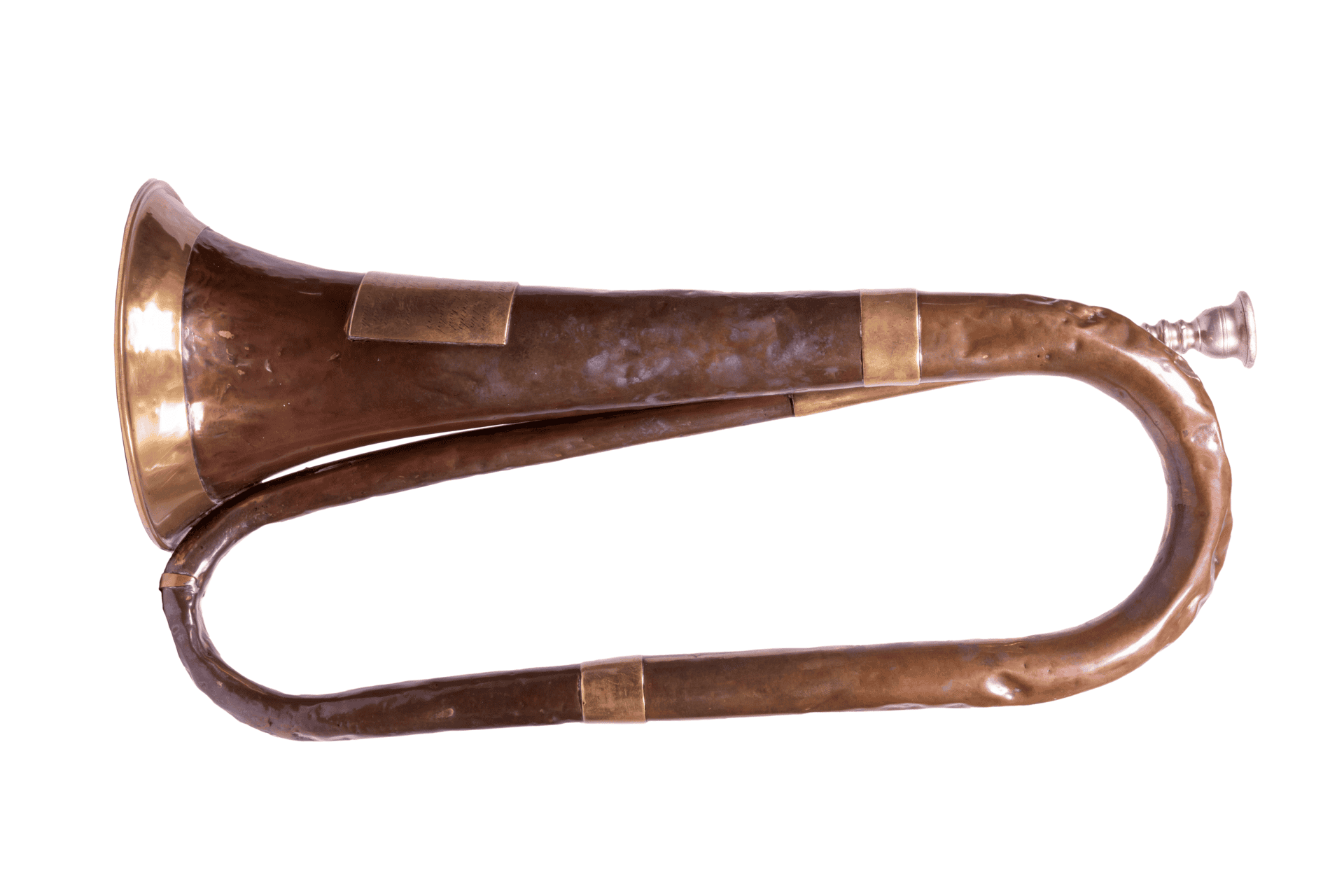
In contrast, this humble bugle is a legacy of one of the regiment’s greatest battlefield glories. John Edwards, a 16 year old trumpeter of the Life Guards, sounded this very bugle multiple times on Sunday 18th June 1815, announcing the charge and retreat of the Life Guards as they fought valiantly to repel numerous assaults by the heavy cavalry of Napoleon Bonaparte’s Grand Armée at the Battle of Waterloo. Visitors are shocked to learn not only of John’s youth, but that against all the odds, he not only survived one of the bloodiest battles in European history, but continued to serve in the regiment with distinction and lived to a ripe old age of 75.
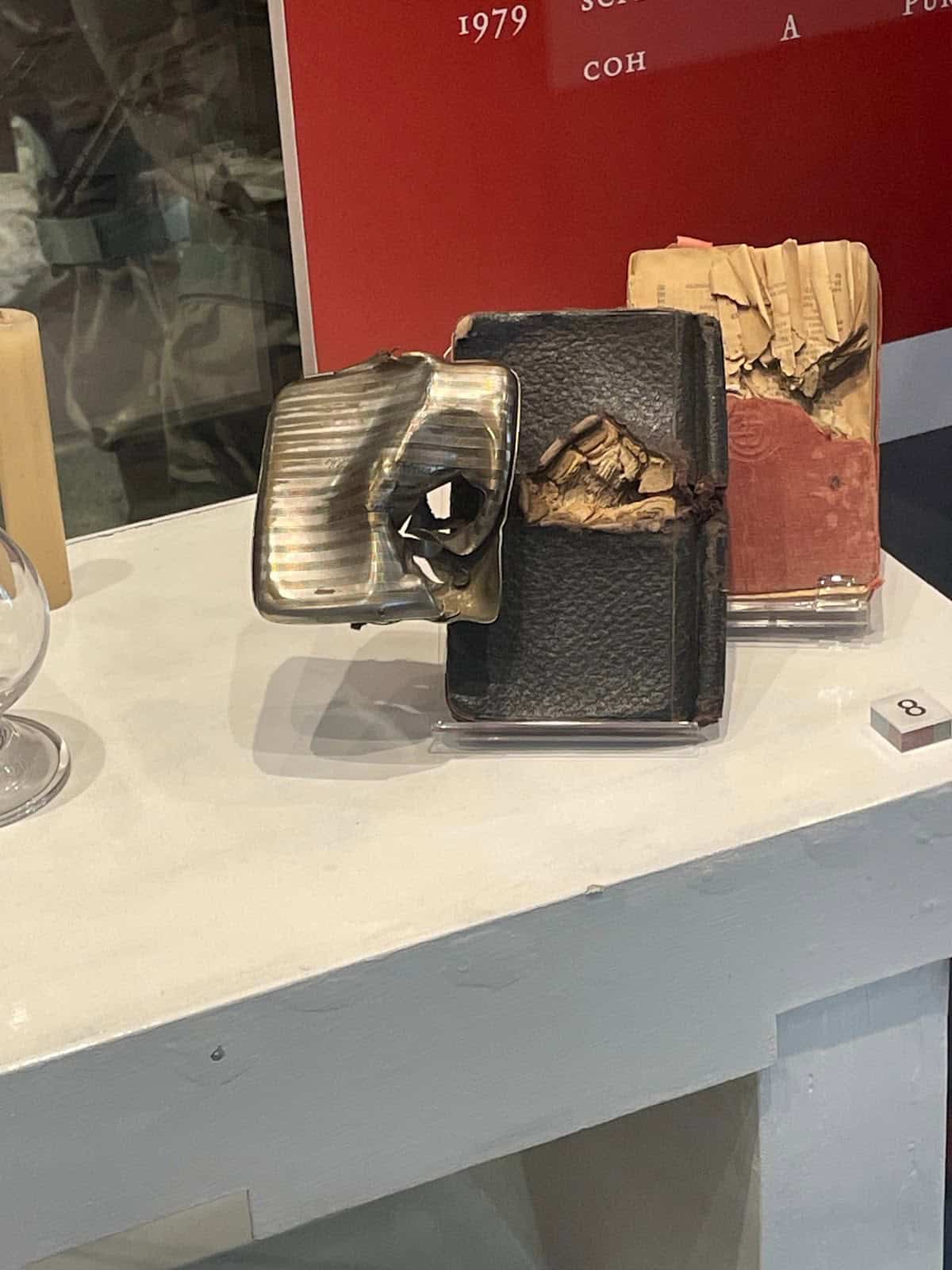
This extraordinary collection of items - a cigarette case, pocket book and French dictionary belonging to Corporal of Horse Buckby - always catch the attention of visitors as they provide a visceral connection to the life of a soldier.
On May 13th 1915, CoH Buckby was part of an attack on a German position when a sniper’s bullet struck him in the chest, piercing the cigarette case and pocket book, stopping only a few pages short of penetrating the French dictionary and the body behind it. Visitors are always awed by the story of Buckby’s lucky escape, and even more so when they learn that he would not only survive the First World War but enjoy a lengthy life and military career due to being narrowly saved from death by these objects.
‘Power can be held in the smallest of things…’
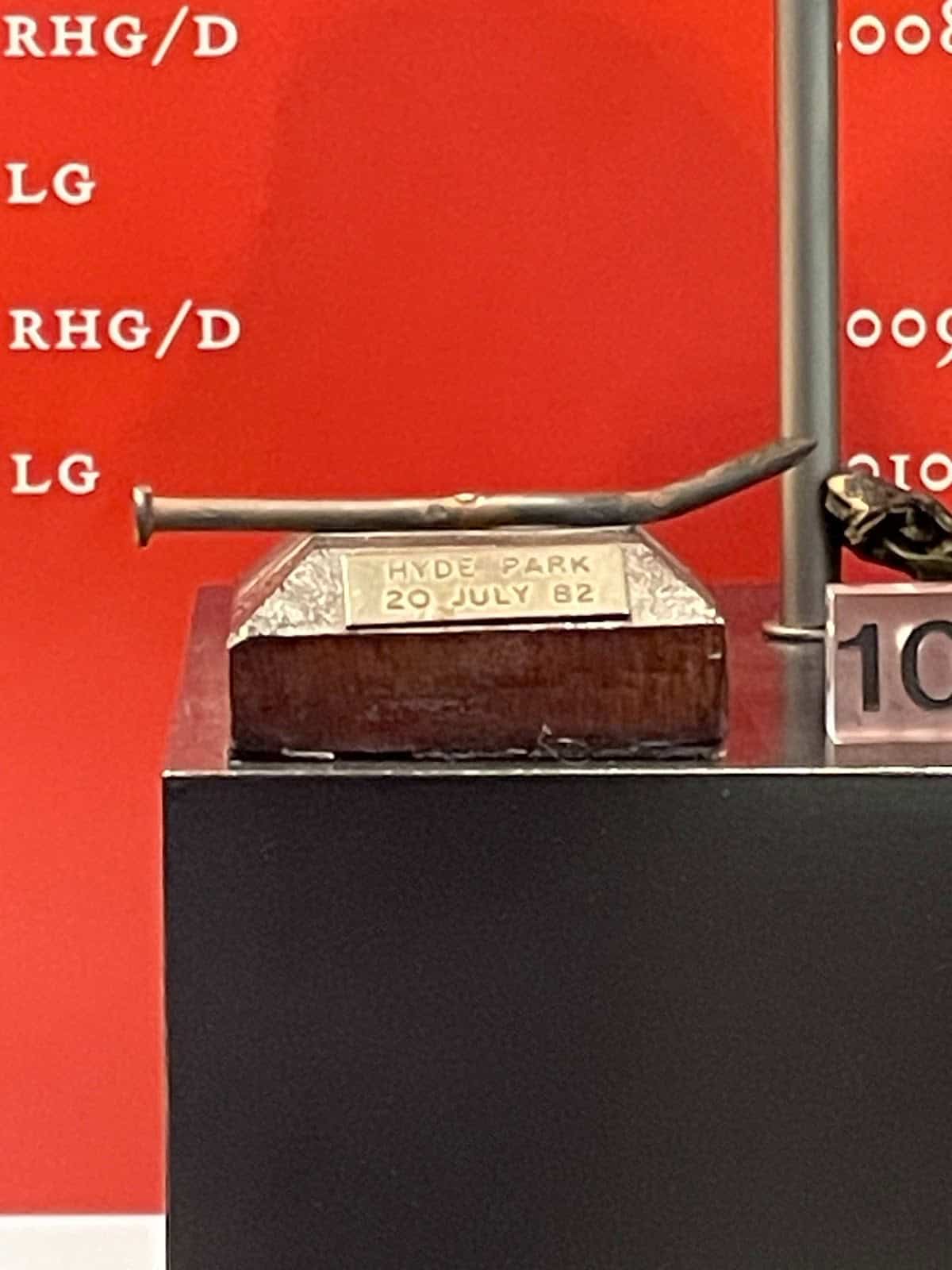
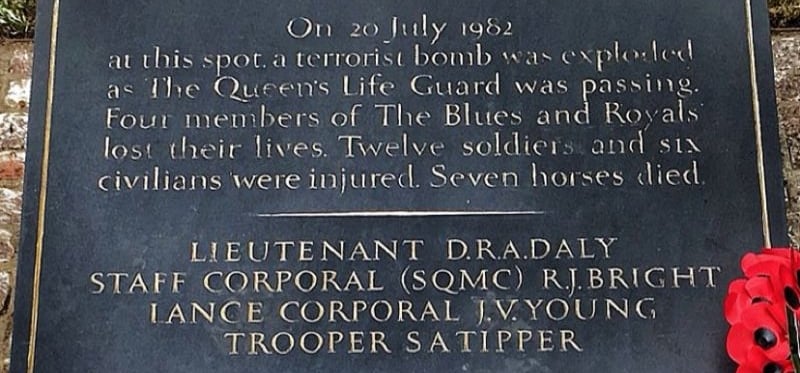
The smallest item in our collection, a bent iron nail, barely three inches long. At first glance it seems innocuous, but this was one of dozens packed into a car bomb detonated by the IRA on July 20th 1982, claiming the lives of four men and seven horses of the Blues and Royals at the corner of Hyde Park as they made their way to Horse Guards for the Changing of the Guard that day.
Even a small object like this serves to remind us that the dangers the Household Cavalry face are not confined to history or far flung battlefields on distant continents; violence can strike even here on the streets of London. It also reminds us that beneath the gleaming pomp and ceremony of their guard duty here in London, the Household Cavalry are an actively serving regiment of the British Armed Forces, and tragically, many cavalrymen do and have given their lives in service to their country.
The Regimental Archive
The archive at Combermere Barracks in Windsor holds extensive records of individual soldiers - regimental order books, diaries, casualty books, court martial ledgers, marriage and baptism rolls. We also hold numerous photos, uniforms, swords (and other weapons), and other ephemera connected to the Household Cavalry’s history. It’s incredibly interesting to look through what we hold, and discover about the lives of former soldiers and what life was like in the regiment in the past. It’s always exciting when you encounter an object and learn something new about it, or something you didn’t know before, proof that there is always something more to discover.
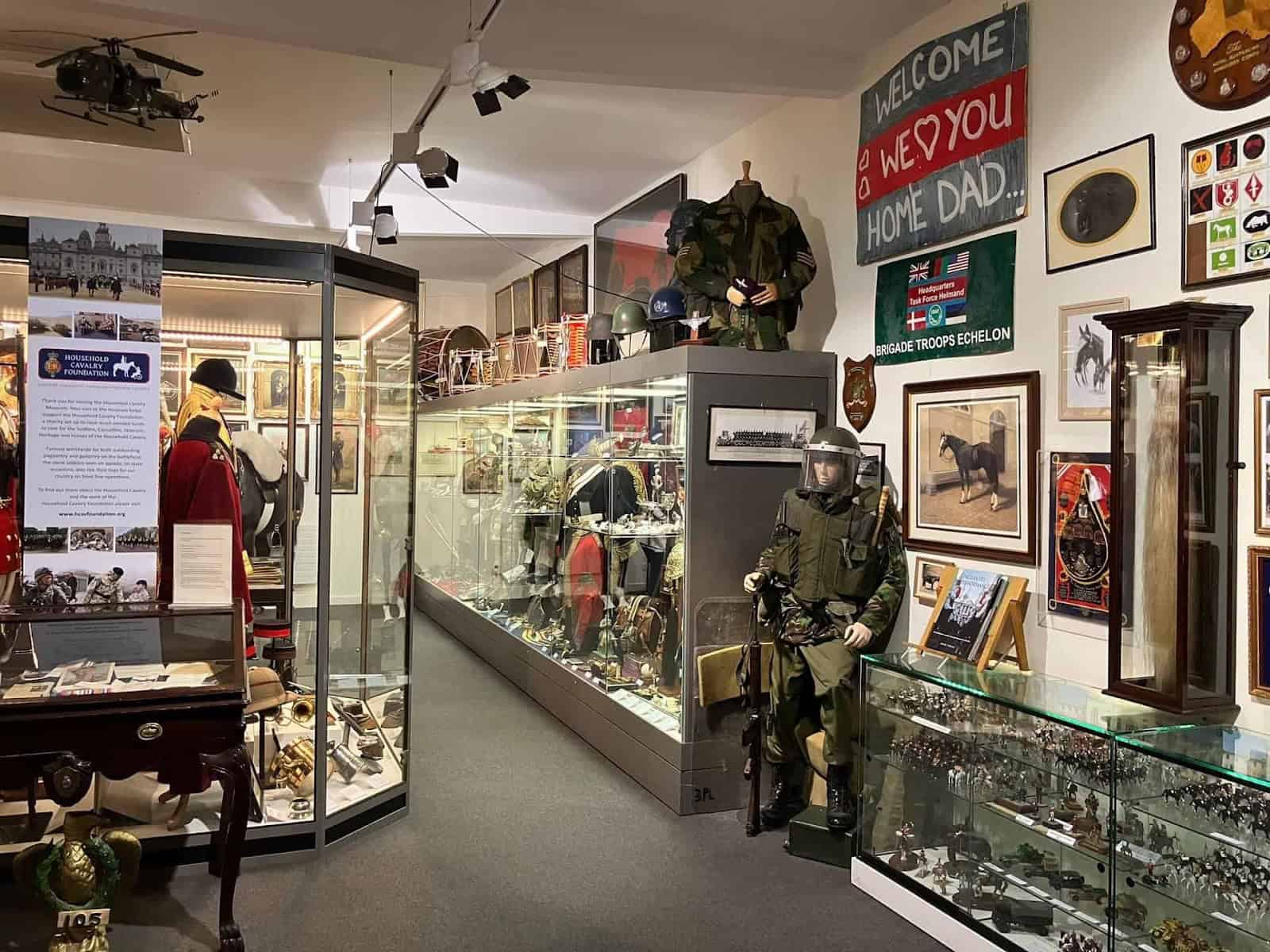
Some of the collection held at the Household Cavalry’s Regimental Archive at Combermere Barracks, Windsor
The Dual Identity Problem
The curatorial challenge is one unique to this collection - every piece tells a story of both military excellence and royal tradition, and the two aren't always easy to hold together in a single display. How do you show the best parts of a regiment that rides down the Mall in the morning and has served in Afghanistan in the afternoon? We endeavour to explain to the visitor, either through guidebook, audio tour, or introduction from staff, that the regiment has a dual role, which hopefully makes it easier for them to understand the contrast in our displays between the shine of royal ceremony and the grime of battlefield duty. Albeit limited by the confines of the Museum: it is quite difficult to showcase the Cavalry’s armoured side when there isn’t much in the collection and you can’t put an armoured vehicle in the museum! It is easier to showcase the ceremonial aspect of the regiment when the Museum gazes directly into the working stables the Cavalry still maintain at Horse Guards: the Cavalry Blacks themselves are one of the biggest draws of the Museum!
Contents
Latest stories
Blog stories
King's Troop Royal Horse Artillery
11th September 2026
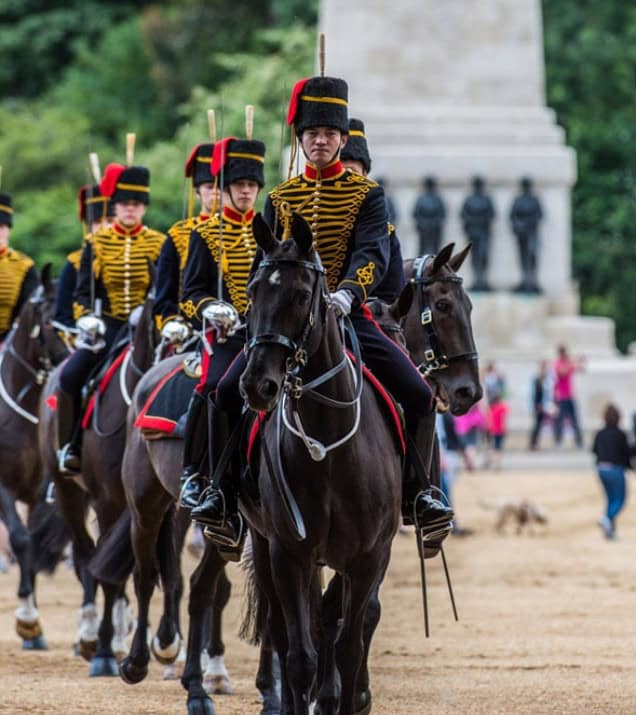
For the next few weeks, the Mounted Guard duty here at Horse Guards will be passed to the King’s Troop Royal Horse Artillery. The soldiers are extremely visually distinctive from the Household Cavalry due to their black and gold uniforms and the black fur busbies they wear in place of helmets. You will usually find the King’s Troop firing the...
HCM News
Household Cavalry Museum unveils multilingual multimedia audio tours
27th August 2026
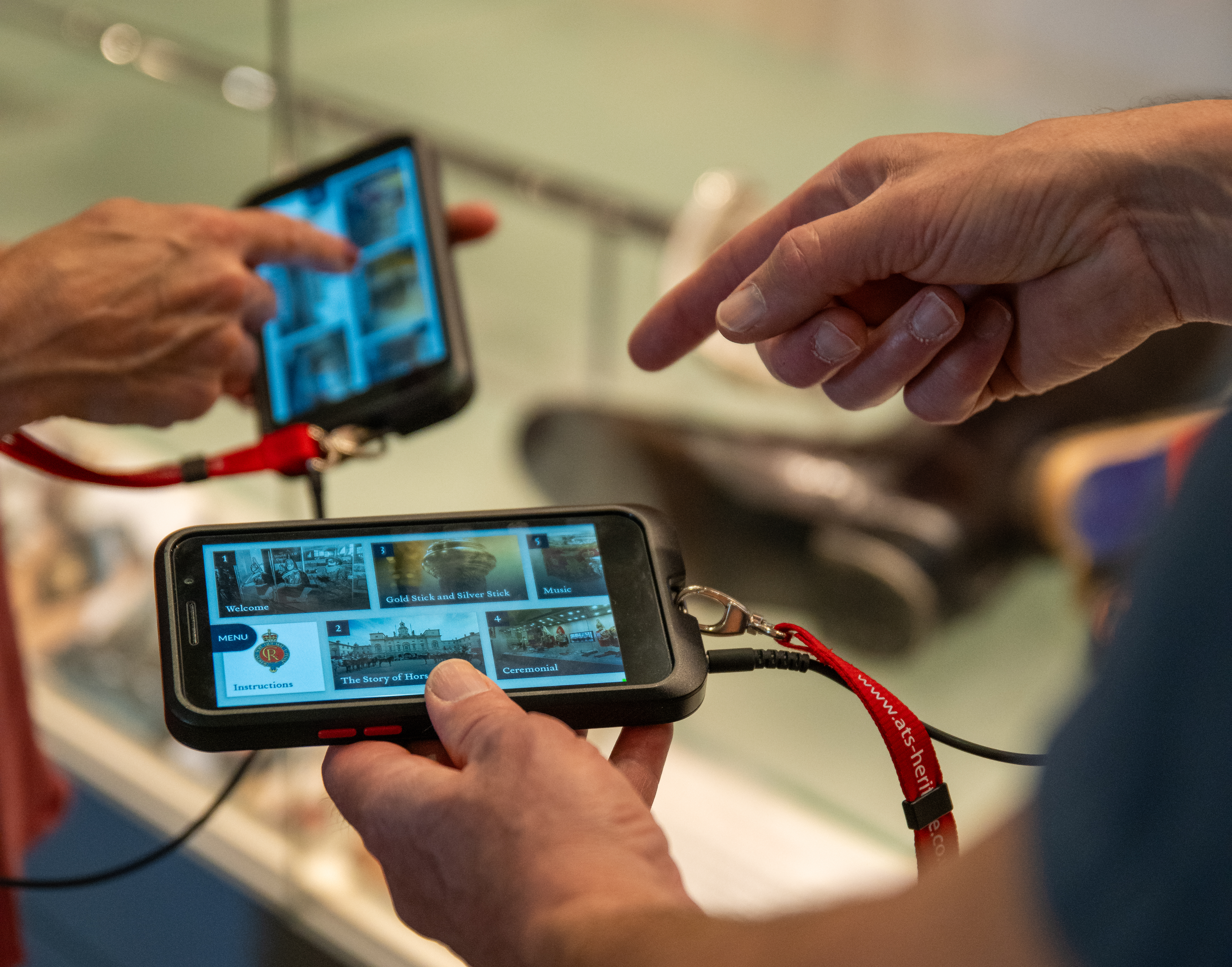
The Household Cavalry Museum has launched its new multimedia audio tours, now available in six languages: English, German, French, Italian, Spanish and Chinese. The new tours represent an investment in enhancing the visitor experience and reflect the museum’s ongoing commitment to making its collections and stories more accessible to audiences from around the world. Located in the heart of London’s historic...
Soldiers' stories
Remembering the Hyde Park Bombing, 20 July 1982
20th July 2026
It is sometimes easy to forget, when seeing the Household Cavalry processing through London in all their pageantry, or standing motionless on their ceremonial guard duty along Whitehall, that they not simply symbols of tradition but serving soldiers of the British Army. . Behind the polished cuirasses and gleaming helmets are men and women who accept the same risks and...
Regimental Histories
The Extraordinary Objects of Waterloo
17th June 2026
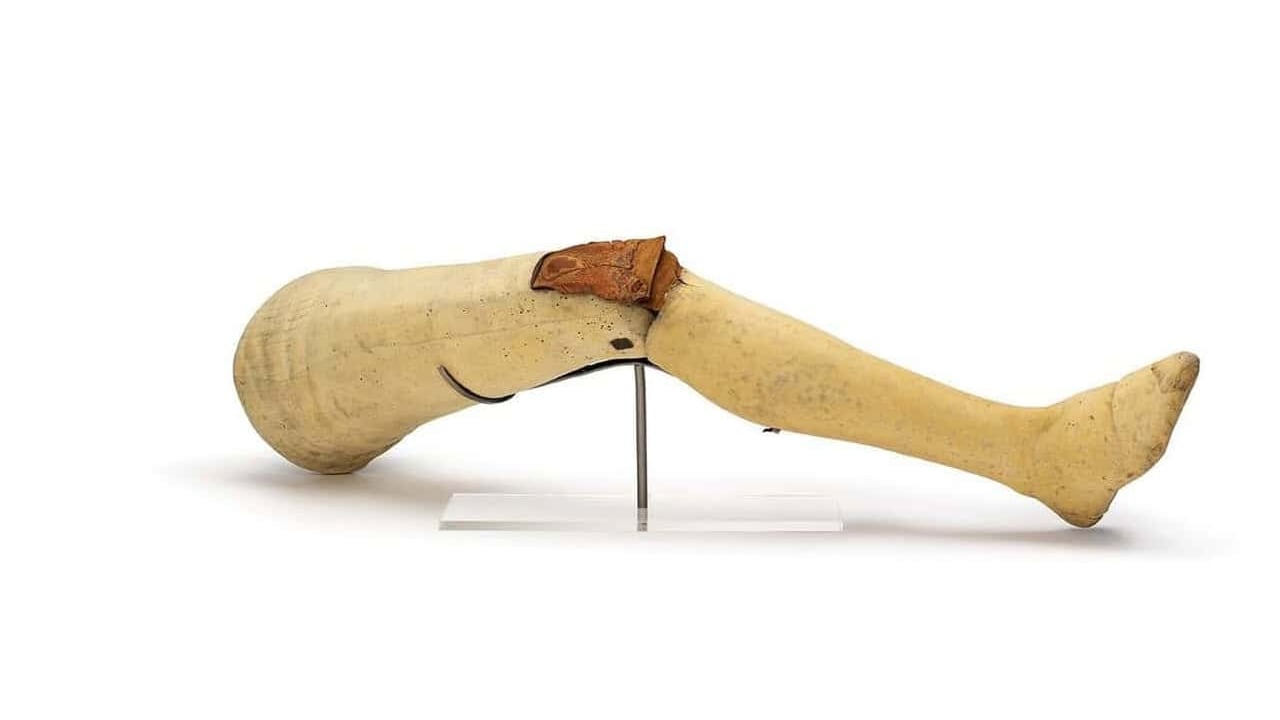
More than 200 years after the Battle of Waterloo ended Napoleon Bonaparte's ambitions and brought the Napoleonic Wars to a close, a handful of remarkable artefacts continue to tell the human stories behind the famous victory. Among the most fascinating items in the Household Cavalry Museum are the skull cast of Corporal of Horse John Shaw, the prosthetic leg of...
Cavalry Horses
Sefton's Story: Courage in the Face of Tragedy
14th July 2026
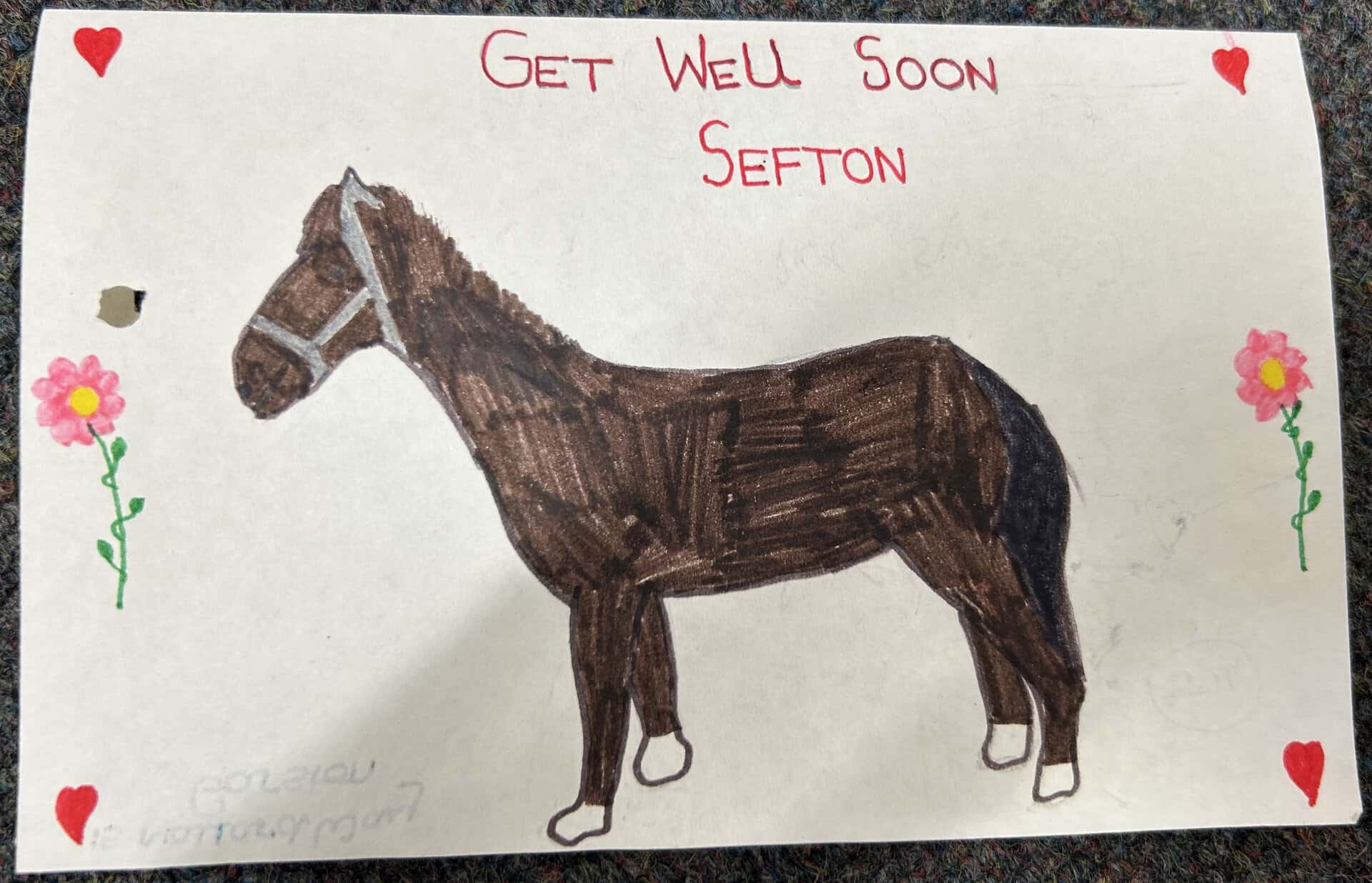
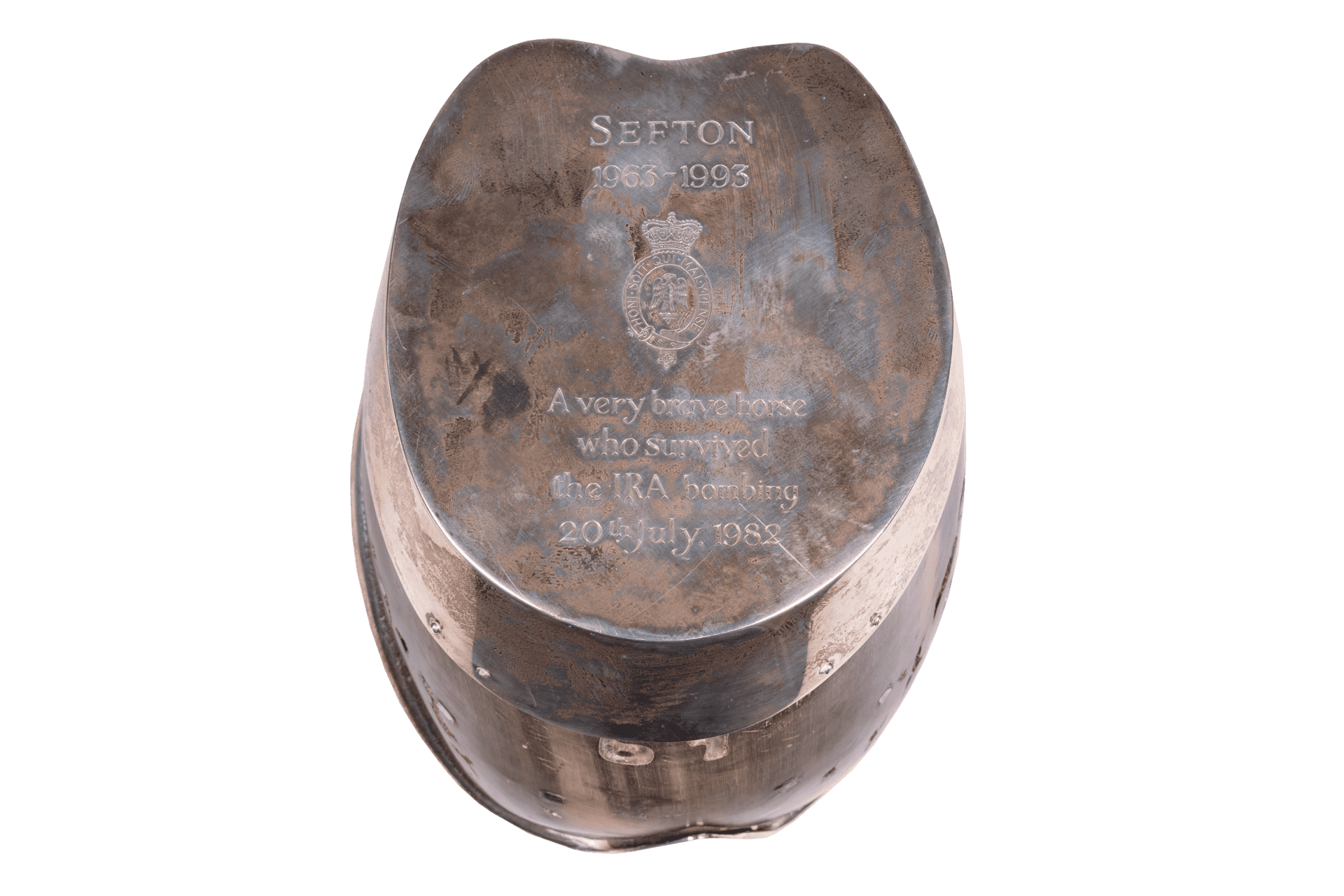
On the 9th of July, we remember Sefton, one of the Household Cavalry’s most famed horses of recent history, who embodied the regiment’s attentiveness to the well-being and care of its horses. Initially notorious amongst the regiment for stubbornness and bad behaviour, Sefton entered British history through horrific circumstances to become a symbol of fortitude, resilience and defiance. He became...
Regimental Histories
Soldiers' stories
Blog stories
The Charge of the 1st Life Guards at Genappe
17th June 2026
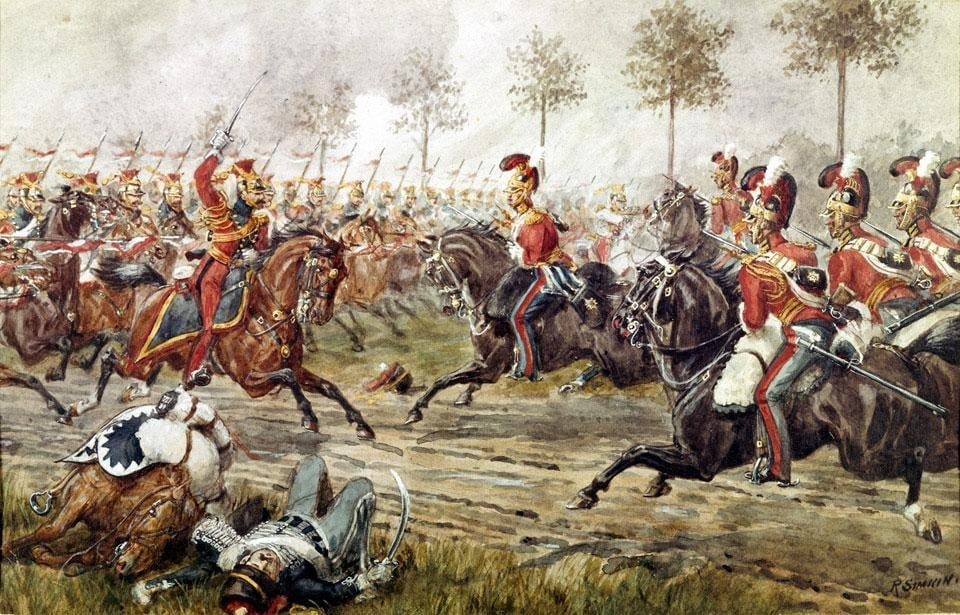
On 17 June 1815, just one day before the Battle of Waterloo, the 1st Life Guards hurled themselves into battle at the Belgian village of Genappe, fighting a savage rearguard action that rescued their comrades of the 7th Hussars and 23rd Light Dragoons from French lancers. Their timely intervention successfully threw back the French cavalry pursuing the Anglo-Allied army as...
Regimental Histories
Arms, Armour & Uniform
Dressed for Duty: The History of the Household Cavalry Uniforms
27th May 2026
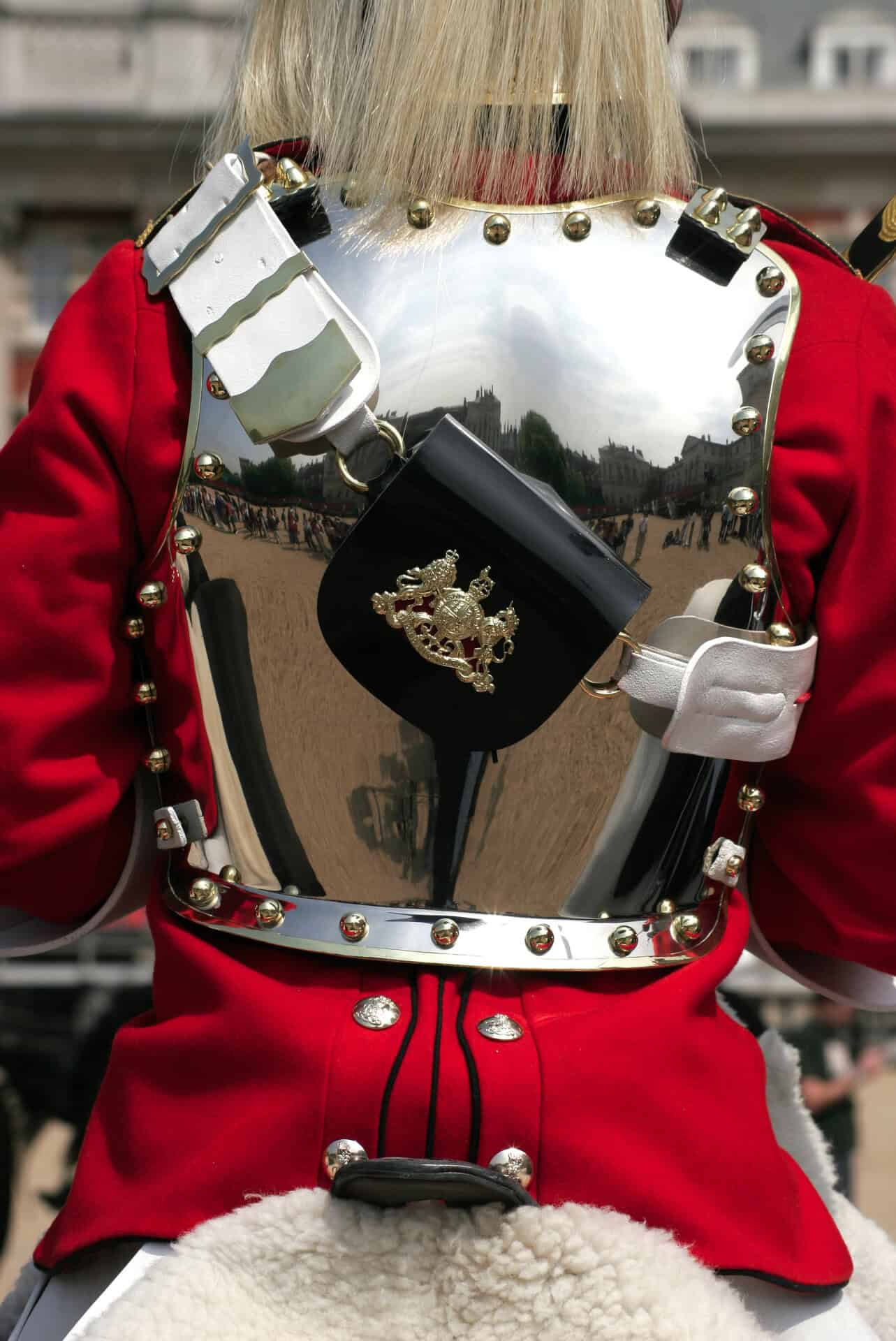
The two regiments of the Household Cavalry, the Life Guards and the Blues and Royals, are visually distinctive on parade, particularly in the coming months when they are a focal point of the summer pageantry on Horse Guards Parade. But what is the significance of their vibrant and ornate uniforms? Why do some members of the Household Cavalry differ from...
Blog stories
The Household Cavalry at the State Opening of Parliament
13th May 2026
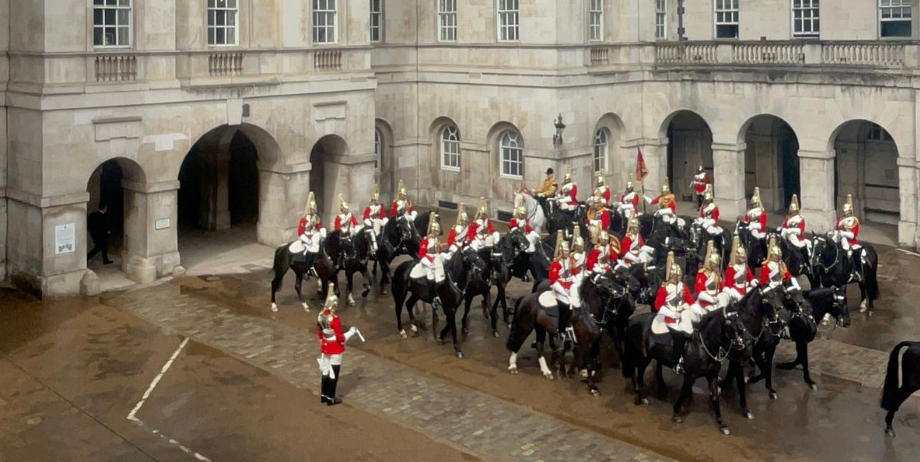
The State Opening of Parliament is one of the most magnificent ceremonial occasions in the British calendar - and at its heart, the Household Cavalry play a central and historic role. Each year, as Parliament begins its new session, the Monarch travels in procession from Buckingham Palace to Westminster. It is the Household Cavalry who lead the way: over one...
Regimental Histories
Philip the Bear: The Household Cavalry's Most Unlikely Companion
23rd March 2026
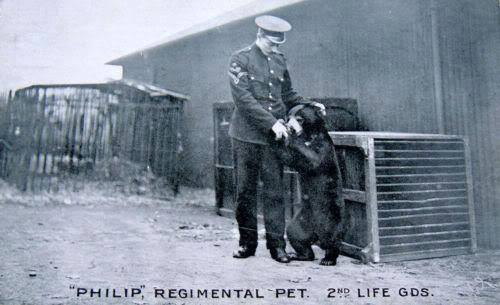
Horses more likely come to mind than bears when one mentions the Household Cavalry, but strange as it sounds, a bear has a unique claim to fame in the Household Cavalry’s regimental history, a fitting story for World Bear Day today… Phillip was a brown bear, possibly imported from Canada where they are a native species, owned as a pet...
Cavalry Horses
From Waterloo to Hyde Park: The Horses of the Household Cavalry
25th February 2026
International War Animal Day commemorates the animals of all shapes and sizes that have served, suffered and died in human conflicts throughout history: from cavalry horses and military service dogs to carrier pigeons and camels. The occasion holds particular significance for the Household Cavalry. Across centuries of military service, the Cavalry Blacks have taken part in some of the bloodiest...
Soldiers' stories
The Day Burnaby Died: Legend and Loss at Abu Klea
16th January 2026
On 17 January 1885, the Household Cavalry lost one of its most legendary figures when Colonel Frederick Gustavus Burnaby was killed in action at the Battle of Abu Klea in present-day Sudan, fighting beside old comrades and dying as he had lived - with daring and courage. When General the Lord Wolseley was ordered to lead the Nile Expedition to...

Cavalry Horses
Top 10 Facts about the Horses of The Household Cavalry
17th December 2025
Towering, disciplined and steeped in centuries of tradition, the Horses of the Household Cavalry Mounted Regiment (HCMR) are as much a part of Britain’s ceremonial heritage as the soldiers who ride them. At full strength, the Regiment cares for more than 280 horses, including those fully trained and in training. To help visitors better understand these remarkable animals and the...

HCM News
A very special visit
24th April 2025
It was a pleasure to welcome Amin and his father Esmail to the museum yesterday (10/04/2024) for a very special visit. Amin, a keen fan of the Household Cavalry, had the chance to get up close with the uniforms, history, and traditions he admires so much at our museum. It was a joy to see his enthusiasm and curiosity come...

Regimental Histories
The Household Cavalry’s Royal Connections
17th April 2025
For over 350 years, the Household Cavalry has stood as a living link between the British Monarchy and its armed forces. From its origins under Charles II to its modern ceremonial duties, the Household Cavalry’s story is woven tightly into the fabric of royal history. Charles II: The Founding Monarch The story begins in the reign of Charles II, who,...

Regimental Histories
The Household Cavalry Timeline: 350 Years of History, Honour and Horses
17th April 2025
The story of the Household Cavalry is not just a tale of ceremonial pomp - it's a living timeline of royal service, military tradition, and national history. From the battlefields of Europe to the heart of London’s ceremonial life, the regiments that make up today’s Household Cavalry have played a continuous and evolving role since the 17th century. 1660 –...

Soldiers' stories
John Edwards (1st Life Guards)
31st December 2024
John Edwards was born on the 4 October 1799 in Westminster, London and joined the 1st Life Guards (1st LG) in 1809 aged just 9 years old and under 4 feet tall....


