
Dressed for Duty: The History of the Household Cavalry Uniforms
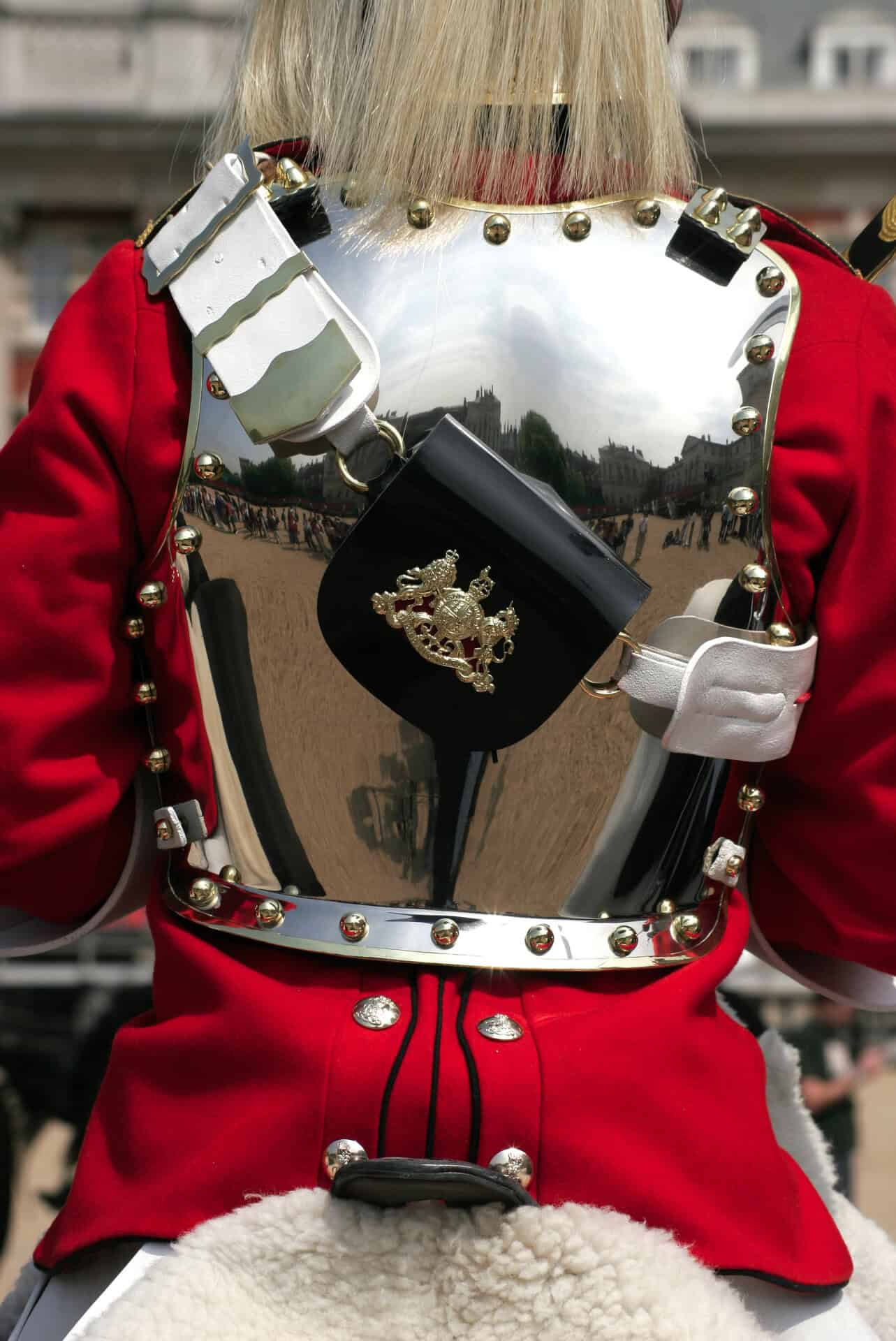
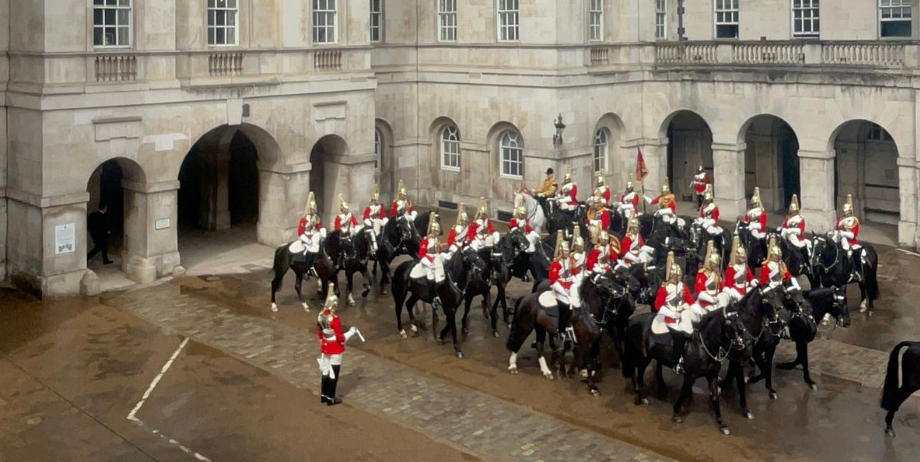
The two regiments of the Household Cavalry, the Life Guards and the Blues and Royals, are visually distinctive on parade, particularly in the coming months when they are a focal point of the summer pageantry on Horse Guards Parade.
But what is the significance of their vibrant and ornate uniforms? Why do some members of the Household Cavalry differ from the typical red and blue regimental uniforms, forming up on parade in black tunics or even gold coats?
The Life Guards
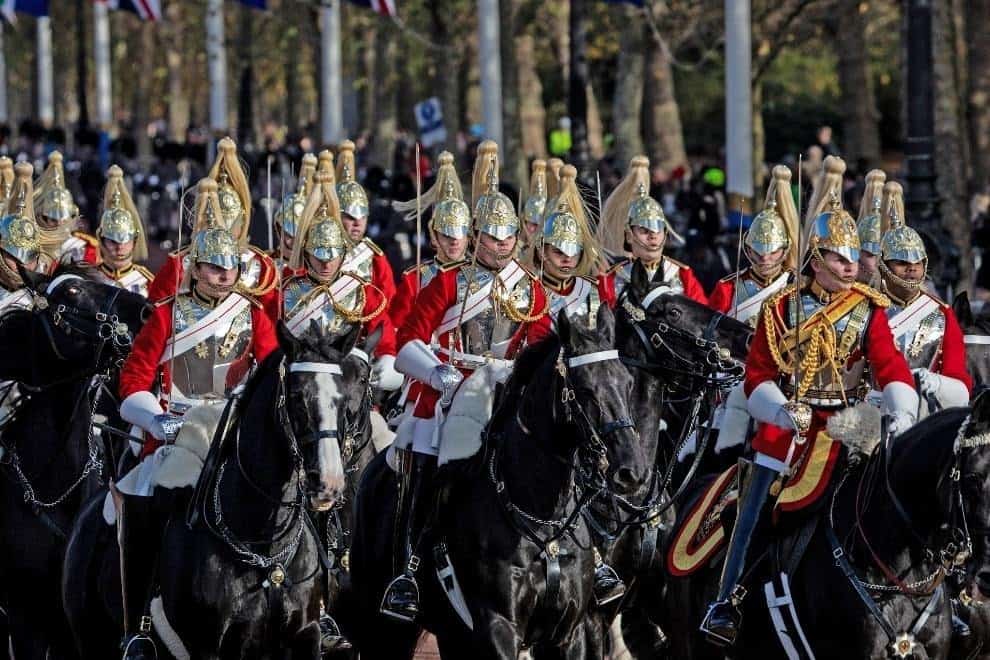
The Life Guards, the senior regiment of the Household Cavalry, were formed in 1660, predominantly from veterans of the Royalist cause during the English Civil War, as a personal guard to King Charles II. They are identified by their scarlet tunics, white helmet plumes, and white sheepskin saddlecloths while mounted on horseback.
The Blues and Royals

The Blues and Royals - previously the ‘Blues’ or Royal Horse Guards, and the ‘Royals’ or Royal Dragoons prior to their amalgamation in 1969, wear dark blue tunics with scarlet helmet plumes, along with black sheepskin saddlecloths while mounted.
Cuirasses
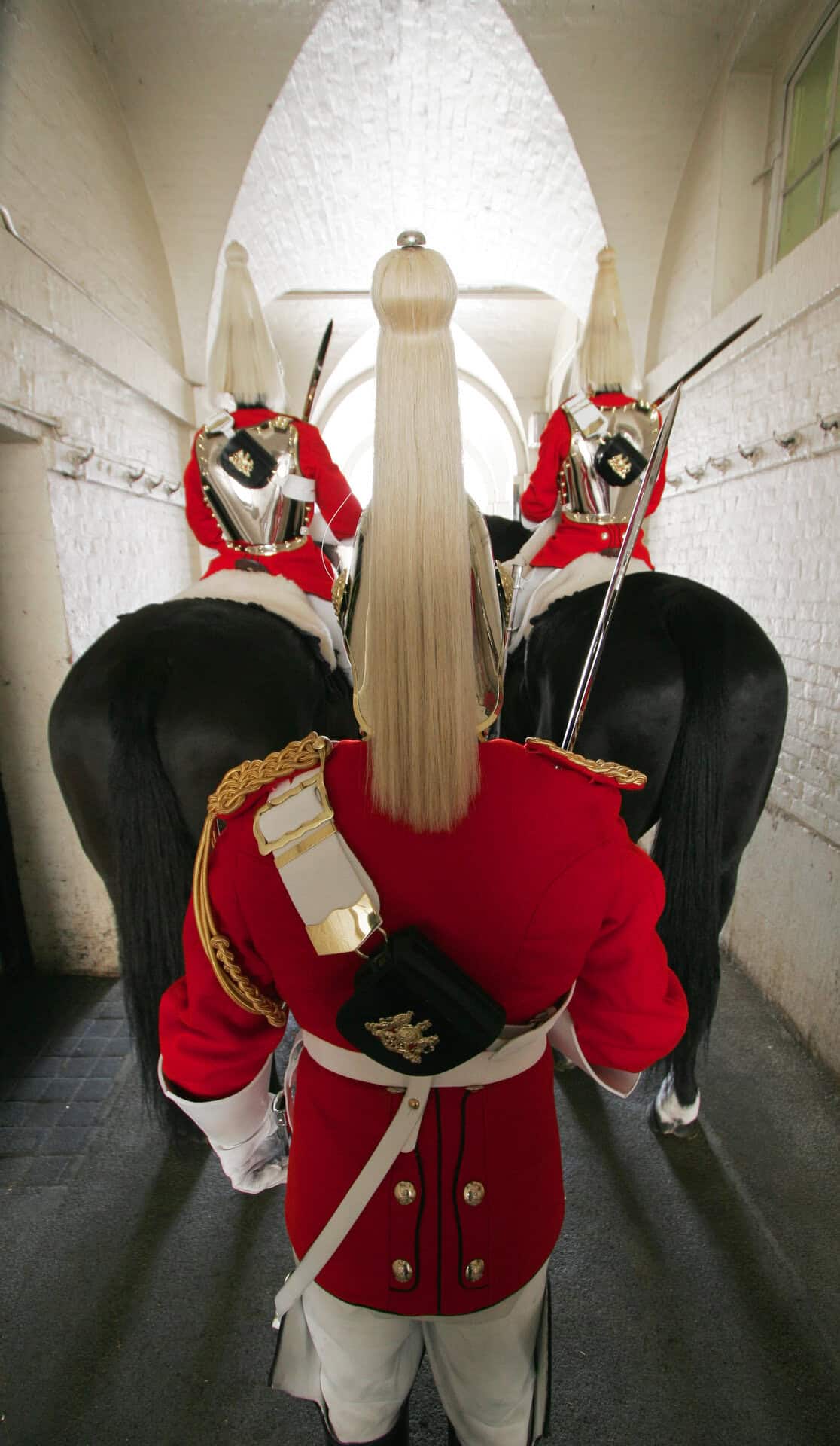
Both regiments wear stainless steel cuirasses which were adopted in the 1820s after the effectiveness of French heavy cavalry (‘cuirassiers’) during the Napoleonic Wars. This forms part of their Summer Review Order also known as Mounted Review Order (from April until October). The white crossbelt, worn with a black cartouche box at the back, was originally intended to hold gunpowder and musket balls when the regiments still fought using black powder firearms. The red cord worn around the crossbelt allowed troopers to carry additional powder charges for quicker reloading in battle. The white crossbelt could be used, should the saddle girth snap in battle, as a makeshift replacement.
Jack Boots
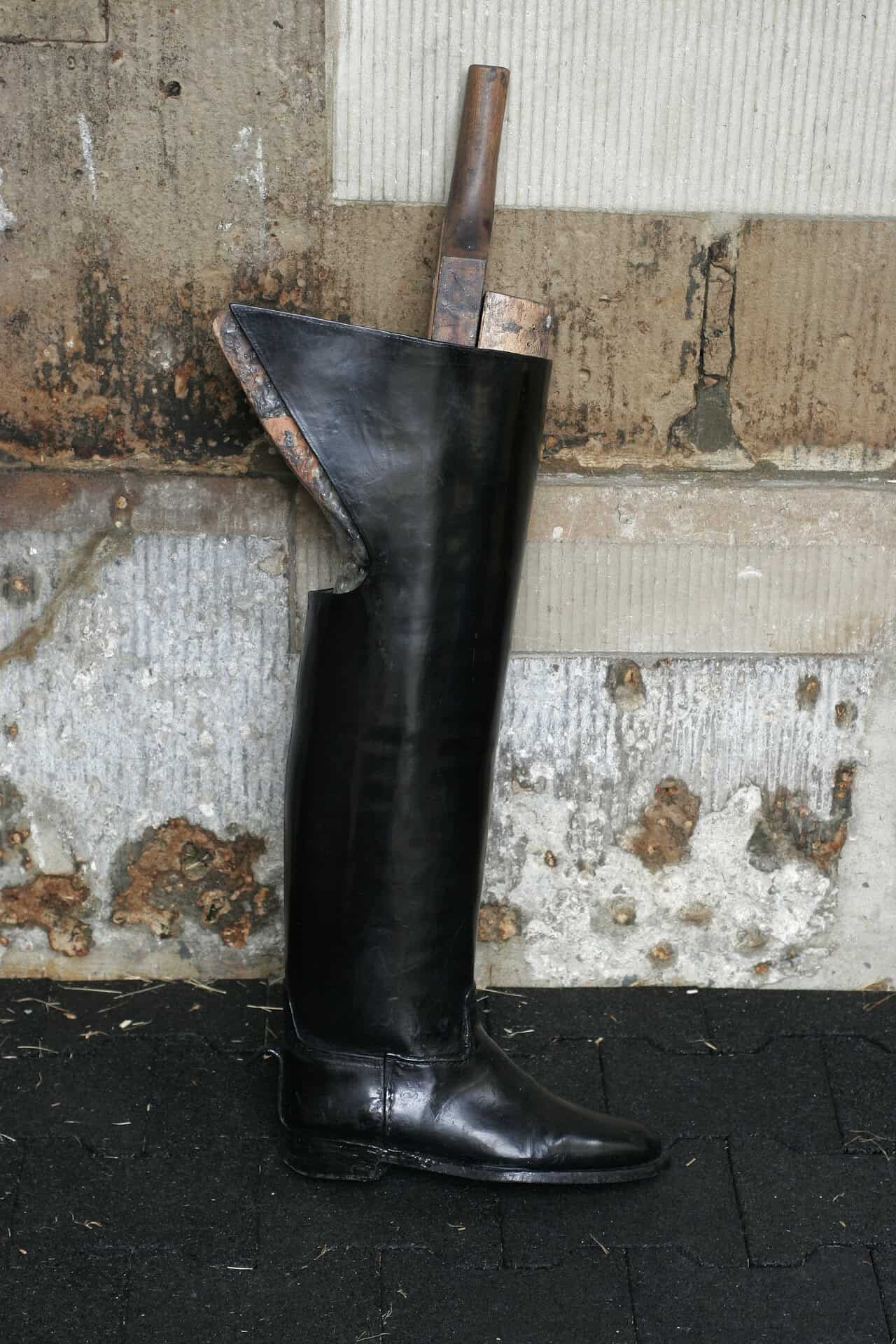
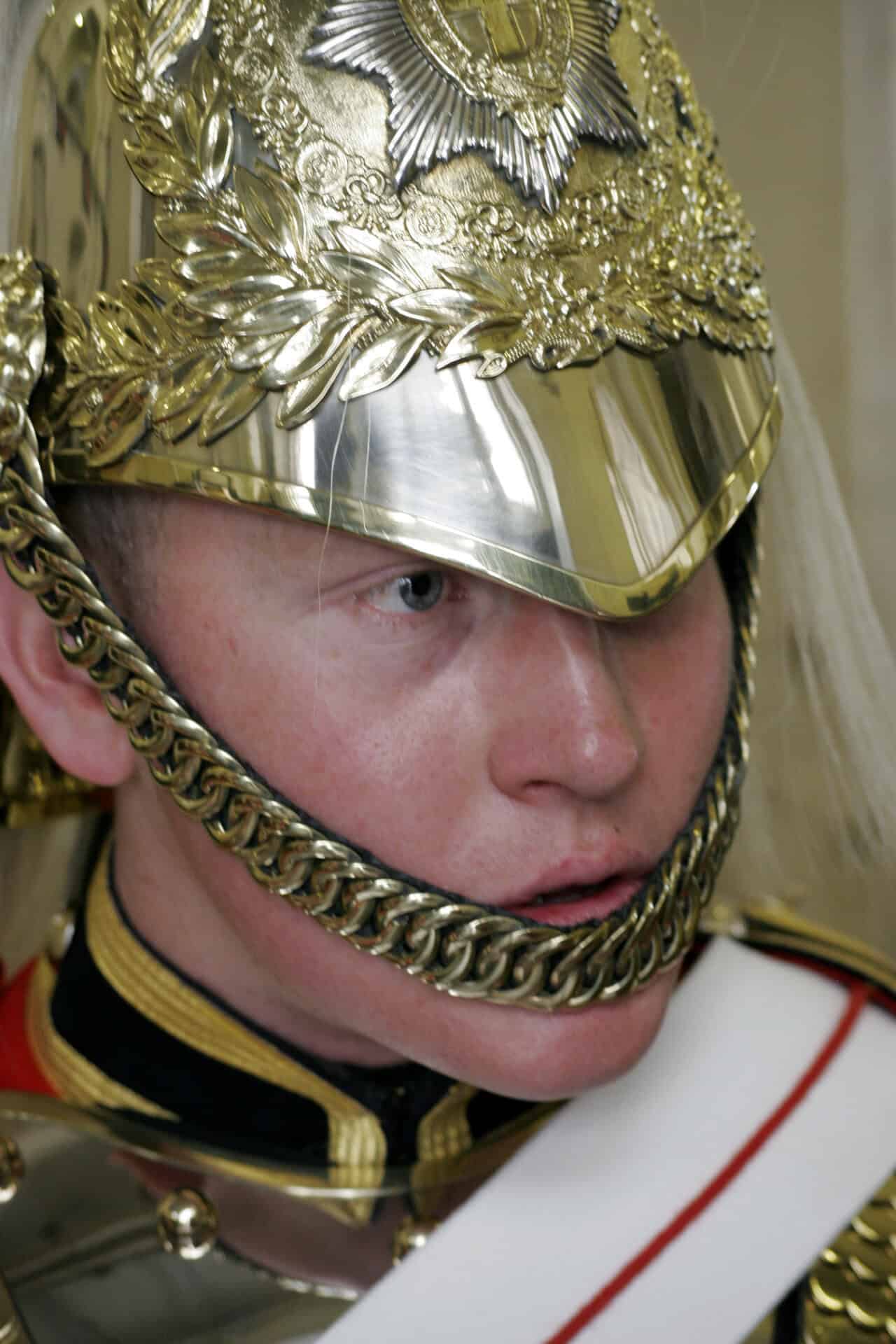
The Household Cavalry soldiers wear thigh-high jackboots and elbow-length gauntlets which were originally designed to give the limbs greater protection in battle. Both are made of extremely tough leather so enemy swords would either glance off, rather than pierce it. The helmet chin strap is worn loosely across the chin by the Life Guards, and loosely under the chin by the Blues and Royals; both styles intended to allow a trooper to quickly discard the helmet if it became dislodged or was seized during combat.
Helmets
The helmets - and, in the case of officers, the collars and sleeves - are engraved with oak and laurel leaves. The oak leaves commemorate Charles II’s escape after the Battle of Worcester in 1651, when he famously hid in the branches of an oak tree to evade capture, while the laurel leaves evoke both victory and Charles’ inspiration from the Praetorian Guard, the personal bodyguard of the Roman Emperors, in the creation of the Household Cavalry.
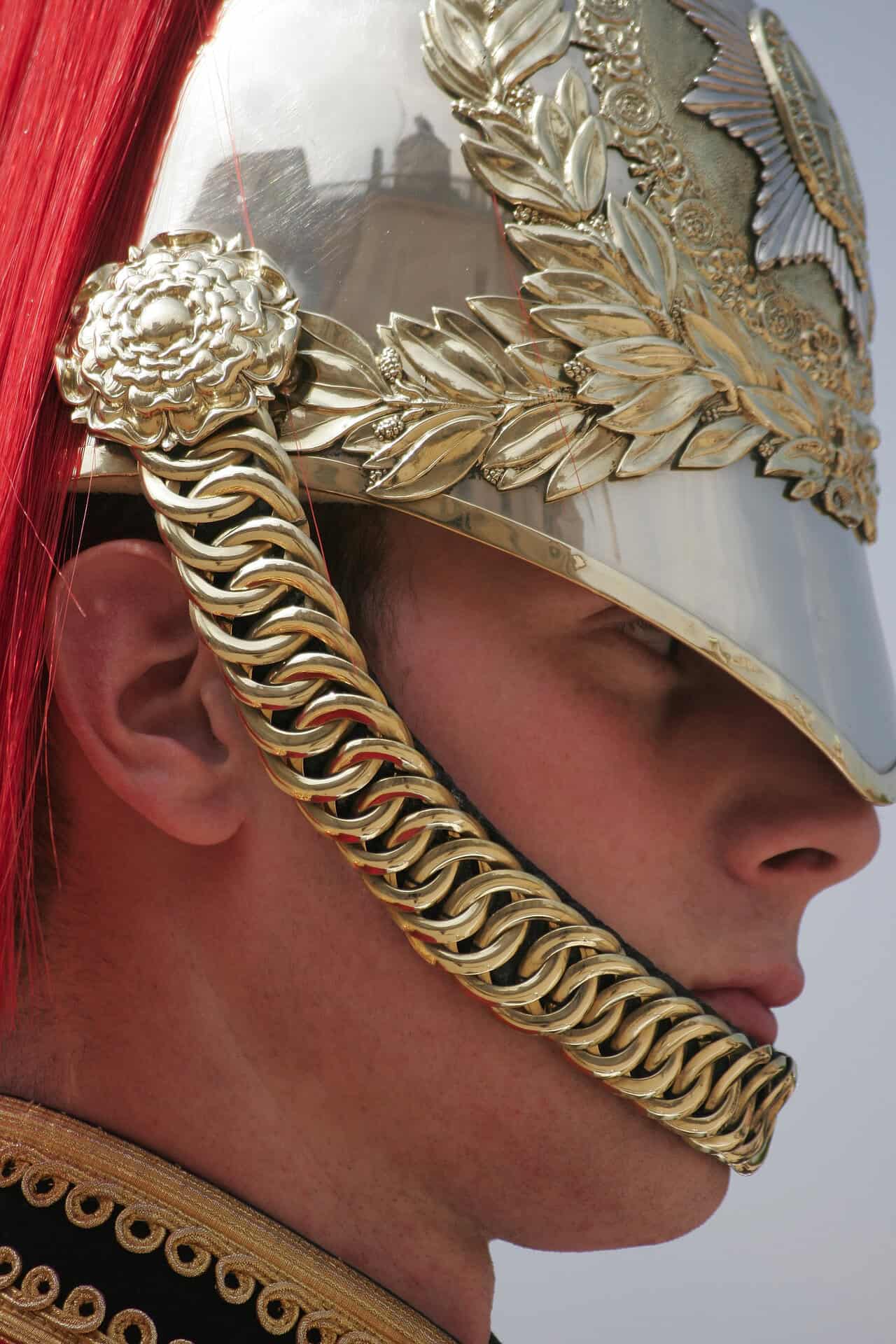
The helmets - and in the case of officers’, the collar and sleeves – are engraved with oak and laurel leaves. The oak leaves commemorate Charles II’s narrow escape from enemy pursuers after his defeat at the Battle of Worcester in 1651 by hiding in the branches of an oak tree, while the laurel leaves evoke both victory and Charles’ inspiration from the Praetorian Guard, the personal bodyguard of the Roman Emperors, in the creation of the Household Cavalry.
Farriers
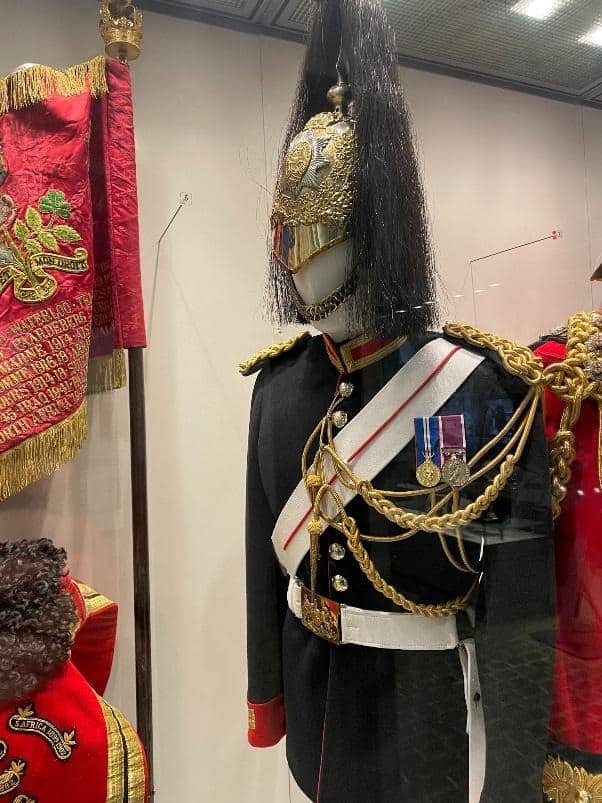
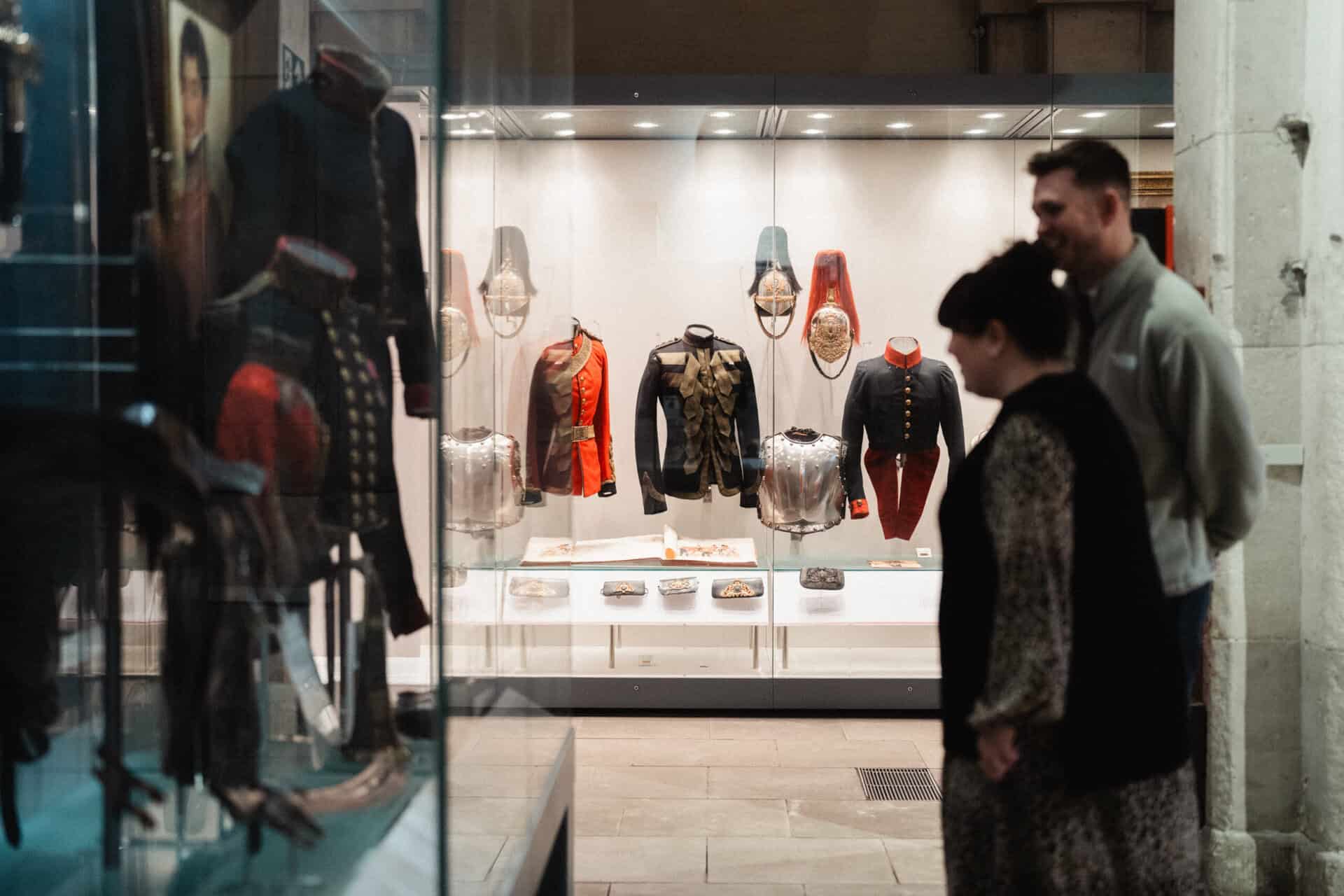
Uniform of a Life Guards Farrier, on display in the Household Cavalry Museum
The Farriers of the Household Cavalry are immediately recognisable on parade by their distinctive black tunics and helmet plumes, and by the ceremonial poleaxe they carry in place of the sword borne by troopers and officers. Two farriers typically appear during major ceremonies such as the King's Birthday Parade (Trooping the Colour).
Their sombre uniform is steeped in history. Farriers have long been responsible for the care of the regiment's horses, but on the battlefield this role extended to treating wounded animals and, when necessary, humanely destroying those too badly injured to recover. The black colouring of their tunics was no mere aesthetic choice. It served the practical purpose of concealing bloodstains in the course of these grim but essential duties.
The poleaxe they carry was similarly used in their duties. The pole part of the axe was designed to put a mortally wounded horse out of its misery through a single blow to the skull. The poll (often spelled pole) is the highest point on a horse's head, located immediately behind the ears. This is where the name poleaxe comes from. While the axehead could be used to sever a horse’s forehoof, branded with its regimental number, to be shown as proof to the quartermaster that said horse had been lost in battle before a new one would be issued. This helped prevent Officers from selling off their horses to pay off debts and then trying to claim the animal was slain to acquire a new one for free.
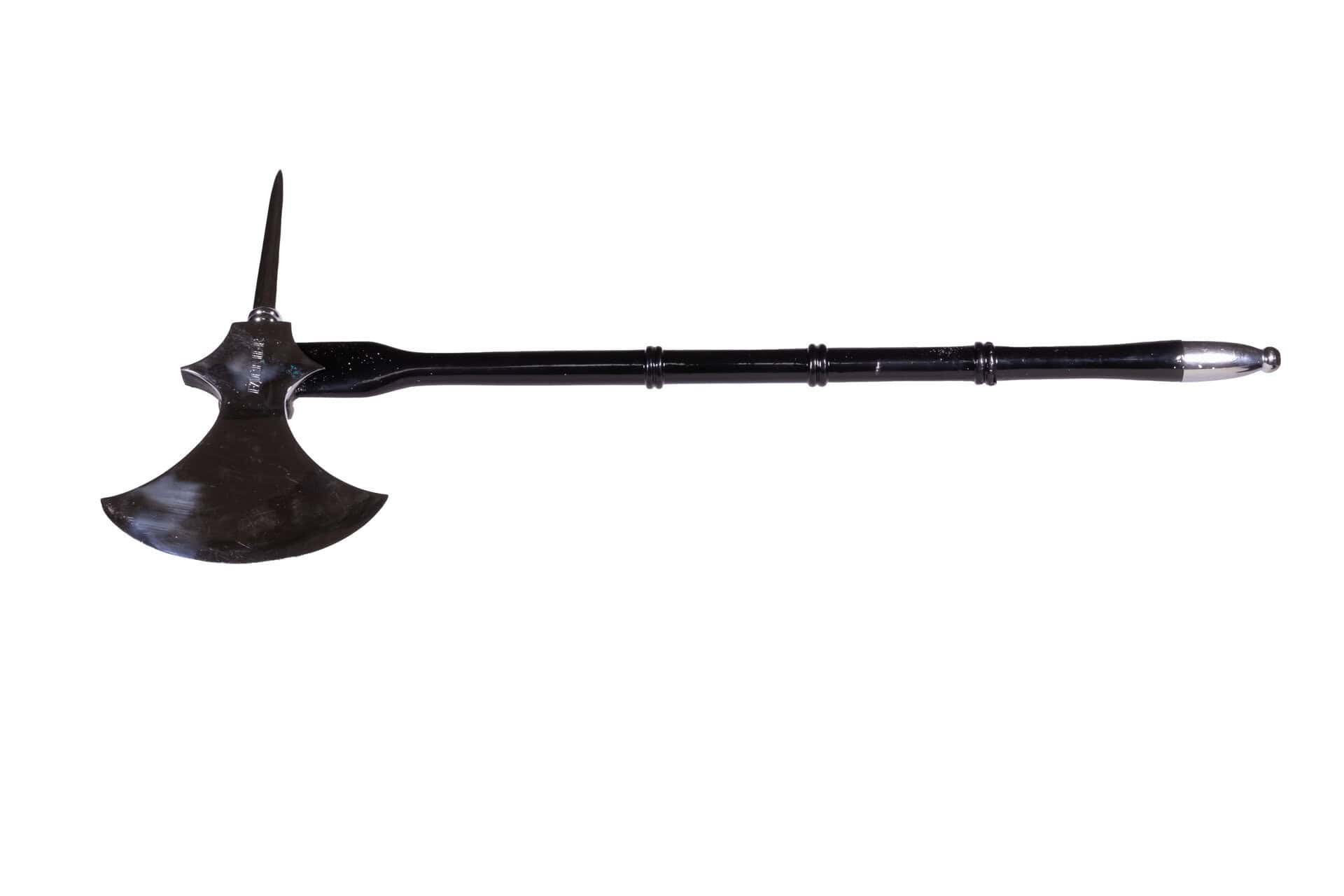
Farrier’s axe on display at the Household Cavalry Museum.
Musicians
The musicians of the Household Cavalry Band are immediately identifiable at ceremonial events owing to the beautifully elaborate state coats they wear. Made of cloth of gold, crimson velvet and lace, accompanied by a blue jockey cap, ‘State Dress’ is only worn in the presence of senior royalty, such as the King, Queen or Prince of Wales: otherwise, the musicians perform in their regimental uniforms.
The State Dress is the oldest continually worn uniform in the British Army, purchased by the Lord Mayor of London as part of the Restoration of King Charles II. The King had wanted 10,000 made for his escorts to wear along the route to Westminster Abbey during his coronation. After Parliament and the Treasury refused to provide the amount of money needed to make that many, the Lord Mayor of London paid for 5000 out of his own pocket. In commemoration of this original generosity, the sole time the Household Cavalry Band wear their State Dress outside the presence of senior royalty is at the Lord Mayor’s Show in the City of London.
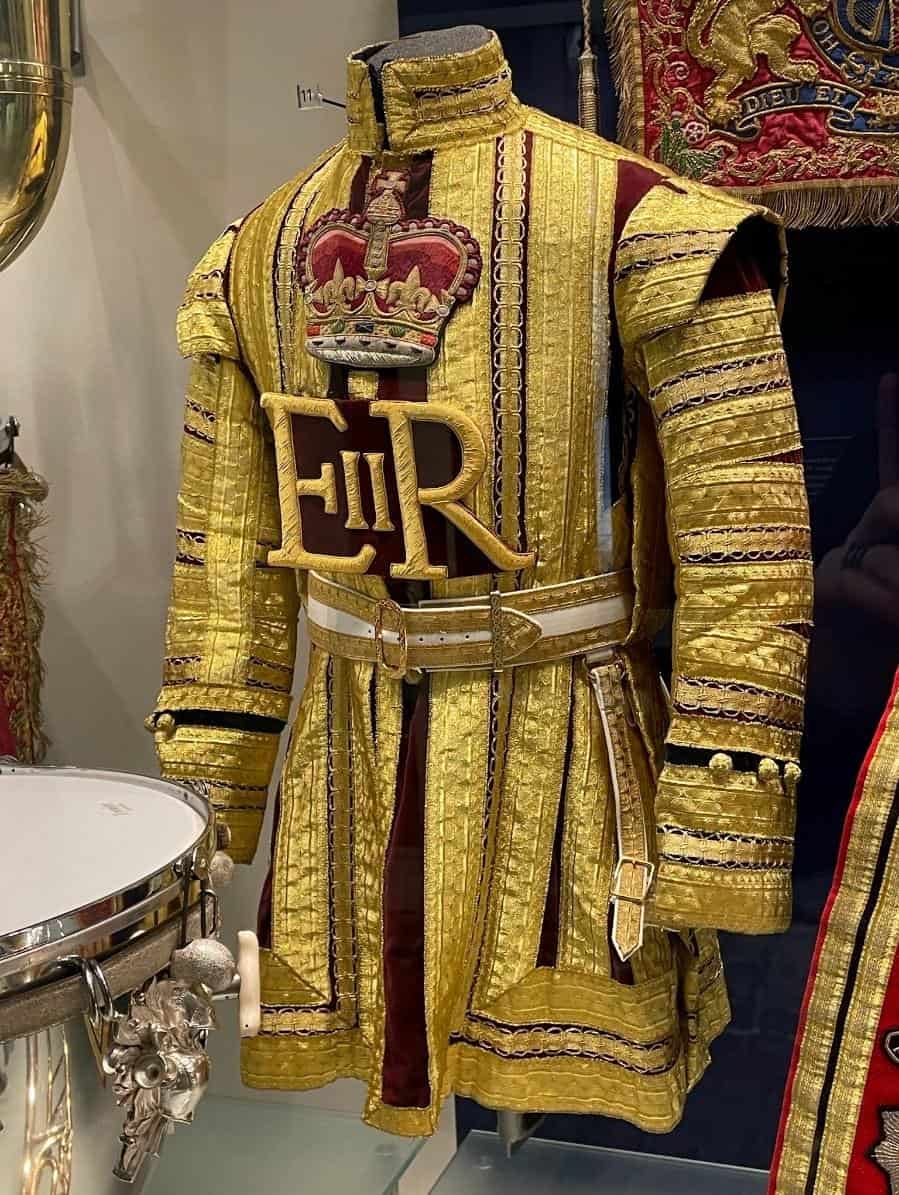
Musician’s State Dress bearing the Royal Cipher of Queen Elizabeth II, on display in the Household Cavalry Museum
The State Dress has remained largely unchanged since the seventeenth century, aside from the addition of a new royal cipher for each monarch. One notable Victorian alteration is the black cuff band with three gold toggles. Queen Victoria ordered the black band to commemorate Prince Albert after his death, while the gold toggles were reportedly added after she observed a musician wiping his nose on the sleeve of his State Coat and sought to prevent a repeat of the indignity.
Latest stories
Blog stories
King's Troop Royal Horse Artillery
11th September 2026
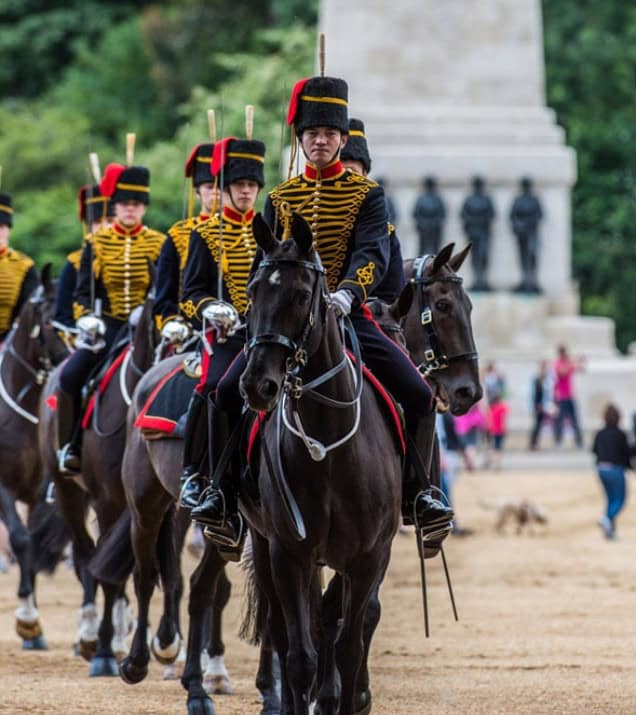
For the next few weeks, the Mounted Guard duty here at Horse Guards will be passed to the King’s Troop Royal Horse Artillery. The soldiers are extremely visually distinctive from the Household Cavalry due to their black and gold uniforms and the black fur busbies they wear in place of helmets. You will usually find the King’s Troop firing the...
HCM News
Household Cavalry Museum unveils multilingual multimedia audio tours
27th August 2026
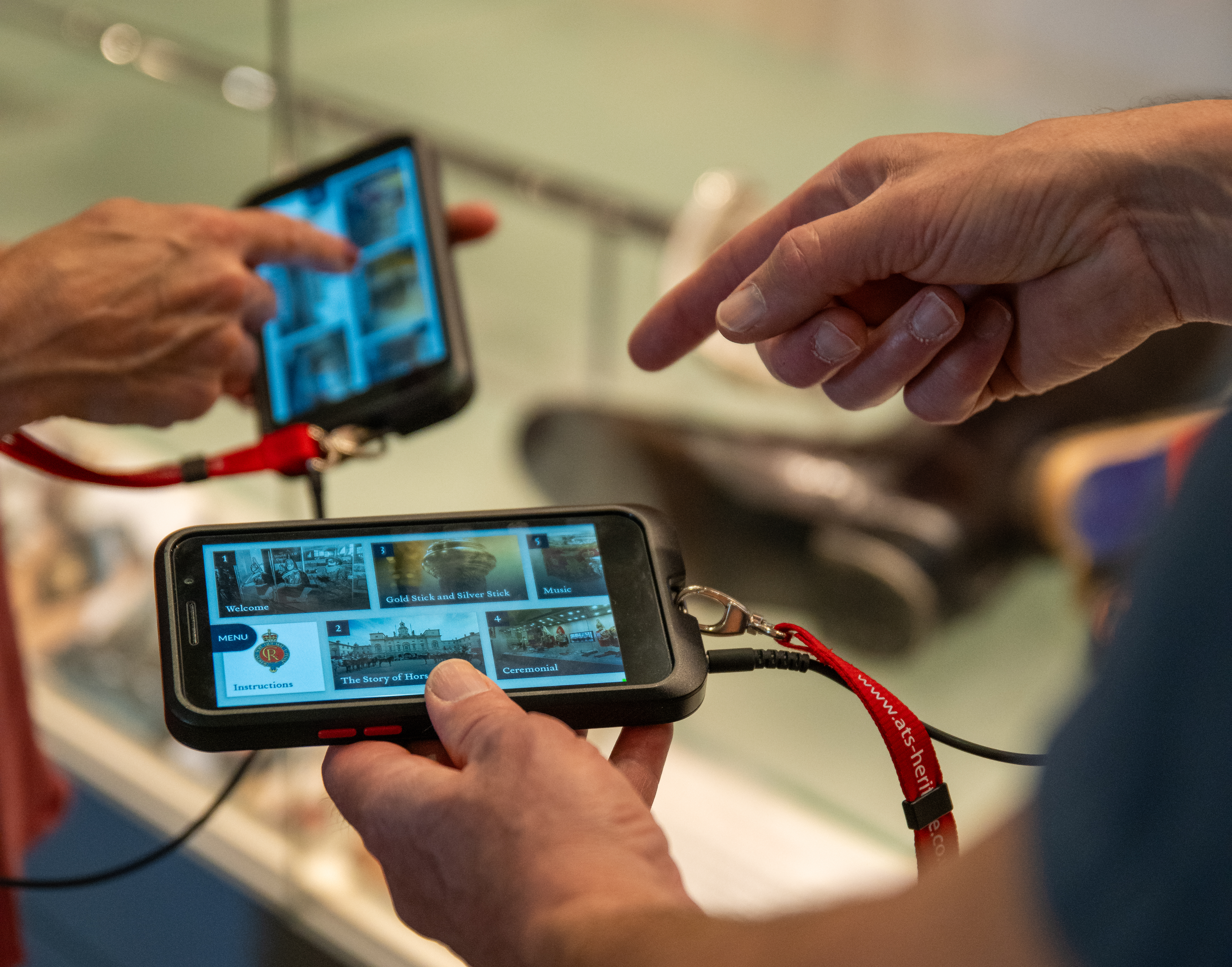
The Household Cavalry Museum has launched its new multimedia audio tours, now available in six languages: English, German, French, Italian, Spanish and Chinese. The new tours represent an investment in enhancing the visitor experience and reflect the museum’s ongoing commitment to making its collections and stories more accessible to audiences from around the world. Located in the heart of London’s historic...
Soldiers' stories
Remembering the Hyde Park Bombing, 20 July 1982
20th July 2026
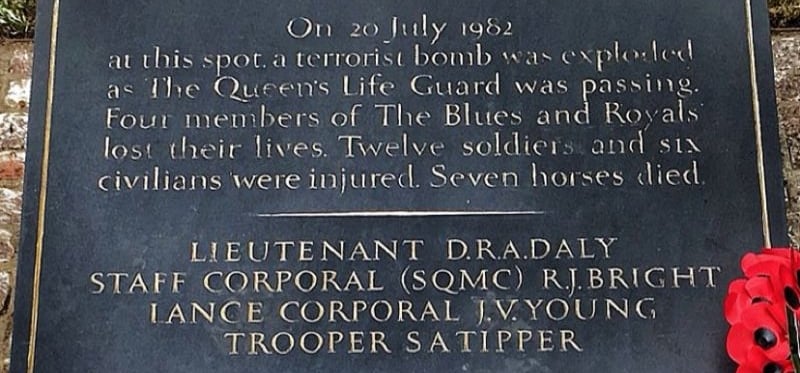
It is sometimes easy to forget, when seeing the Household Cavalry processing through London in all their pageantry, or standing motionless on their ceremonial guard duty along Whitehall, that they not simply symbols of tradition but serving soldiers of the British Army. . Behind the polished cuirasses and gleaming helmets are men and women who accept the same risks and...
Regimental Histories
The Extraordinary Objects of Waterloo
17th June 2026
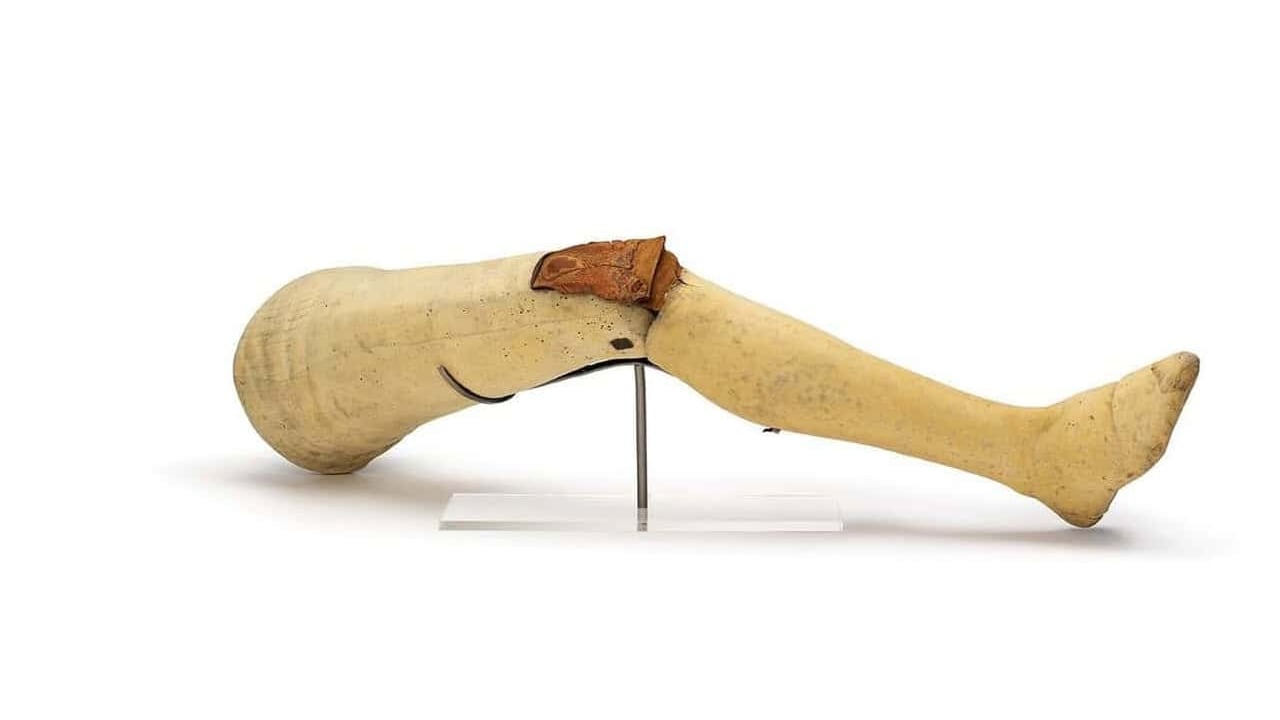
More than 200 years after the Battle of Waterloo ended Napoleon Bonaparte's ambitions and brought the Napoleonic Wars to a close, a handful of remarkable artefacts continue to tell the human stories behind the famous victory. Among the most fascinating items in the Household Cavalry Museum are the skull cast of Corporal of Horse John Shaw, the prosthetic leg of...
Cavalry Horses
Sefton's Story: Courage in the Face of Tragedy
14th July 2026
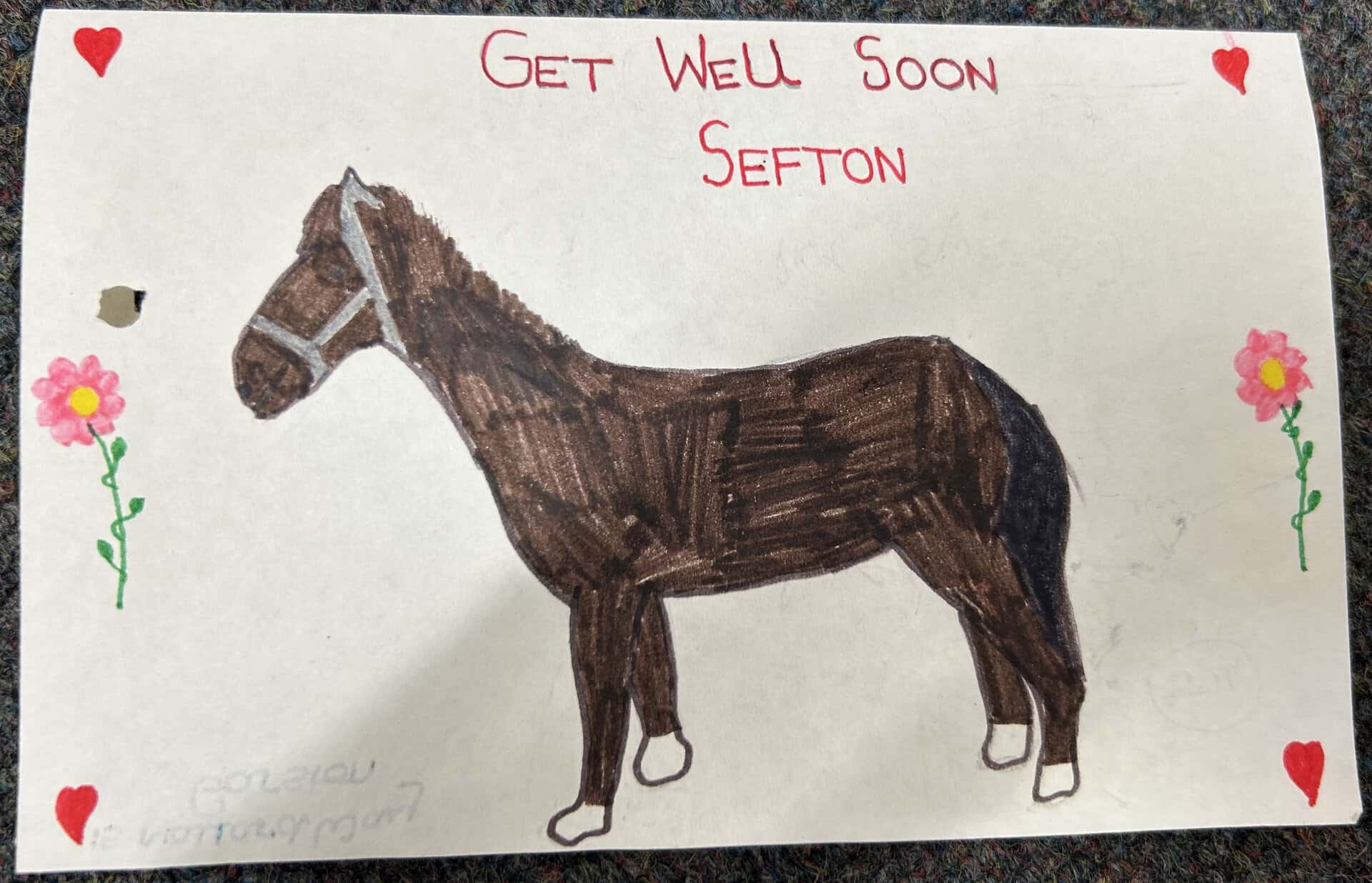
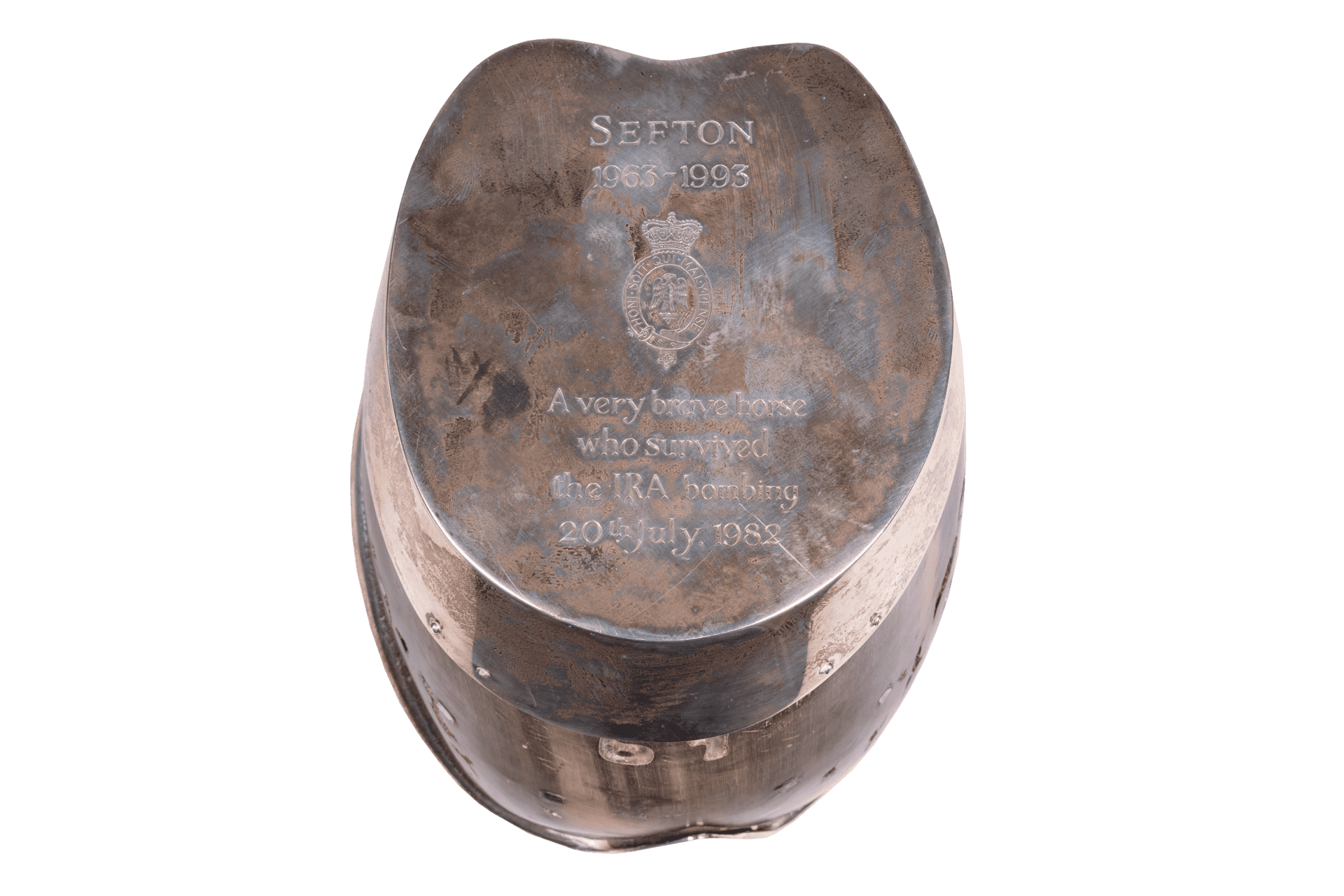
On the 9th of July, we remember Sefton, one of the Household Cavalry’s most famed horses of recent history, who embodied the regiment’s attentiveness to the well-being and care of its horses. Initially notorious amongst the regiment for stubbornness and bad behaviour, Sefton entered British history through horrific circumstances to become a symbol of fortitude, resilience and defiance. He became...
Regimental Histories
Soldiers' stories
Blog stories
The Charge of the 1st Life Guards at Genappe
17th June 2026
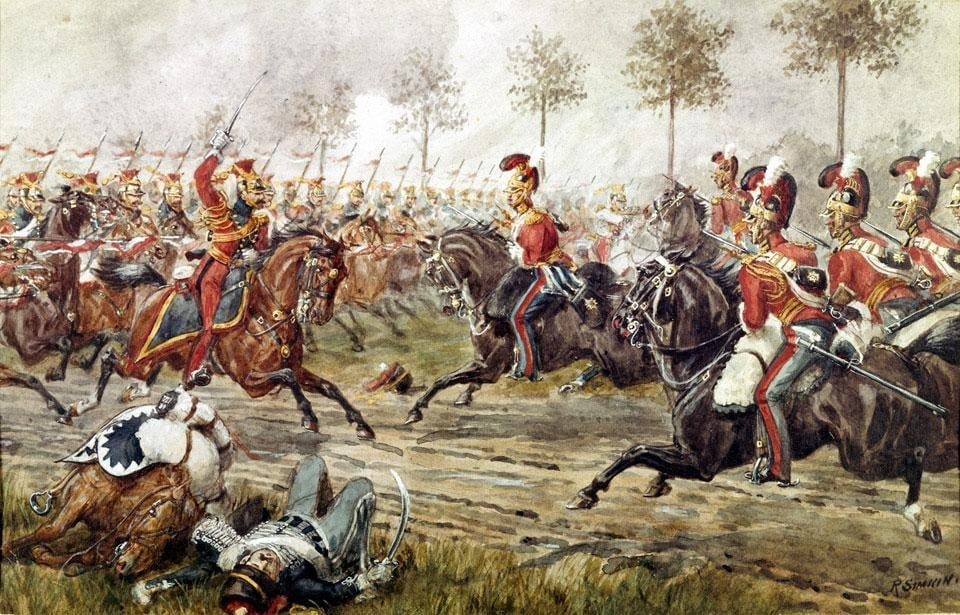
On 17 June 1815, just one day before the Battle of Waterloo, the 1st Life Guards hurled themselves into battle at the Belgian village of Genappe, fighting a savage rearguard action that rescued their comrades of the 7th Hussars and 23rd Light Dragoons from French lancers. Their timely intervention successfully threw back the French cavalry pursuing the Anglo-Allied army as...
Blog stories
The Household Cavalry at the State Opening of Parliament
13th May 2026
The State Opening of Parliament is one of the most magnificent ceremonial occasions in the British calendar - and at its heart, the Household Cavalry play a central and historic role. Each year, as Parliament begins its new session, the Monarch travels in procession from Buckingham Palace to Westminster. It is the Household Cavalry who lead the way: over one...
Regimental Histories
What the Objects Don’t Say: Inside the Household Cavalry Museum Collection
13th April 2026
Every artefact displayed in the Household Cavalry Museum comes with a unique story attached, some far stranger than others - from a phenomenally expensive officer’s breastplate worn only once, to a sword wielded in combat at the Battle of Waterloo, to a campaign medal awarded to a cavalry horse for bravery. It is the Museum’s responsibility to preserve this historical...
Regimental Histories
Philip the Bear: The Household Cavalry's Most Unlikely Companion
23rd March 2026
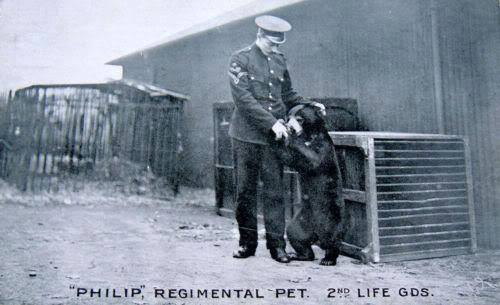
Horses more likely come to mind than bears when one mentions the Household Cavalry, but strange as it sounds, a bear has a unique claim to fame in the Household Cavalry’s regimental history, a fitting story for World Bear Day today… Phillip was a brown bear, possibly imported from Canada where they are a native species, owned as a pet...
Cavalry Horses
From Waterloo to Hyde Park: The Horses of the Household Cavalry
25th February 2026
International War Animal Day commemorates the animals of all shapes and sizes that have served, suffered and died in human conflicts throughout history: from cavalry horses and military service dogs to carrier pigeons and camels. The occasion holds particular significance for the Household Cavalry. Across centuries of military service, the Cavalry Blacks have taken part in some of the bloodiest...
Soldiers' stories
The Day Burnaby Died: Legend and Loss at Abu Klea
16th January 2026
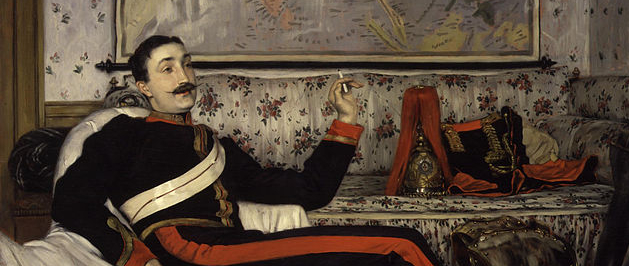
On 17 January 1885, the Household Cavalry lost one of its most legendary figures when Colonel Frederick Gustavus Burnaby was killed in action at the Battle of Abu Klea in present-day Sudan, fighting beside old comrades and dying as he had lived - with daring and courage. When General the Lord Wolseley was ordered to lead the Nile Expedition to...

Cavalry Horses
Top 10 Facts about the Horses of The Household Cavalry
17th December 2025
Towering, disciplined and steeped in centuries of tradition, the Horses of the Household Cavalry Mounted Regiment (HCMR) are as much a part of Britain’s ceremonial heritage as the soldiers who ride them. At full strength, the Regiment cares for more than 280 horses, including those fully trained and in training. To help visitors better understand these remarkable animals and the...

HCM News
A very special visit
24th April 2025
It was a pleasure to welcome Amin and his father Esmail to the museum yesterday (10/04/2024) for a very special visit. Amin, a keen fan of the Household Cavalry, had the chance to get up close with the uniforms, history, and traditions he admires so much at our museum. It was a joy to see his enthusiasm and curiosity come...

Regimental Histories
The Household Cavalry’s Royal Connections
17th April 2025
For over 350 years, the Household Cavalry has stood as a living link between the British Monarchy and its armed forces. From its origins under Charles II to its modern ceremonial duties, the Household Cavalry’s story is woven tightly into the fabric of royal history. Charles II: The Founding Monarch The story begins in the reign of Charles II, who,...

Regimental Histories
The Household Cavalry Timeline: 350 Years of History, Honour and Horses
17th April 2025
The story of the Household Cavalry is not just a tale of ceremonial pomp - it's a living timeline of royal service, military tradition, and national history. From the battlefields of Europe to the heart of London’s ceremonial life, the regiments that make up today’s Household Cavalry have played a continuous and evolving role since the 17th century. 1660 –...

Soldiers' stories
John Edwards (1st Life Guards)
31st December 2024
John Edwards was born on the 4 October 1799 in Westminster, London and joined the 1st Life Guards (1st LG) in 1809 aged just 9 years old and under 4 feet tall....


